

What I’ve Changed My Mind About
On orchids, wallpaper, symmetry, and the pleasure of being wrong

It’s been almost a month since I last wrote here, which is both unlike me and, apparently, noticeable. A few of you have sent the sweetest messages asking where I’ve been. One read, “You’ve been MIA. I hope it’s because you’ve actually taken some time off this summer.”
Reader, I wish.
Instead, I’ve spent the last month moving between Morocco, Paris, Connecticut, New Jersey and Southampton, styling houses, shooting campaigns and carrying the kinds of things through airports that make strangers give you a little extra room.
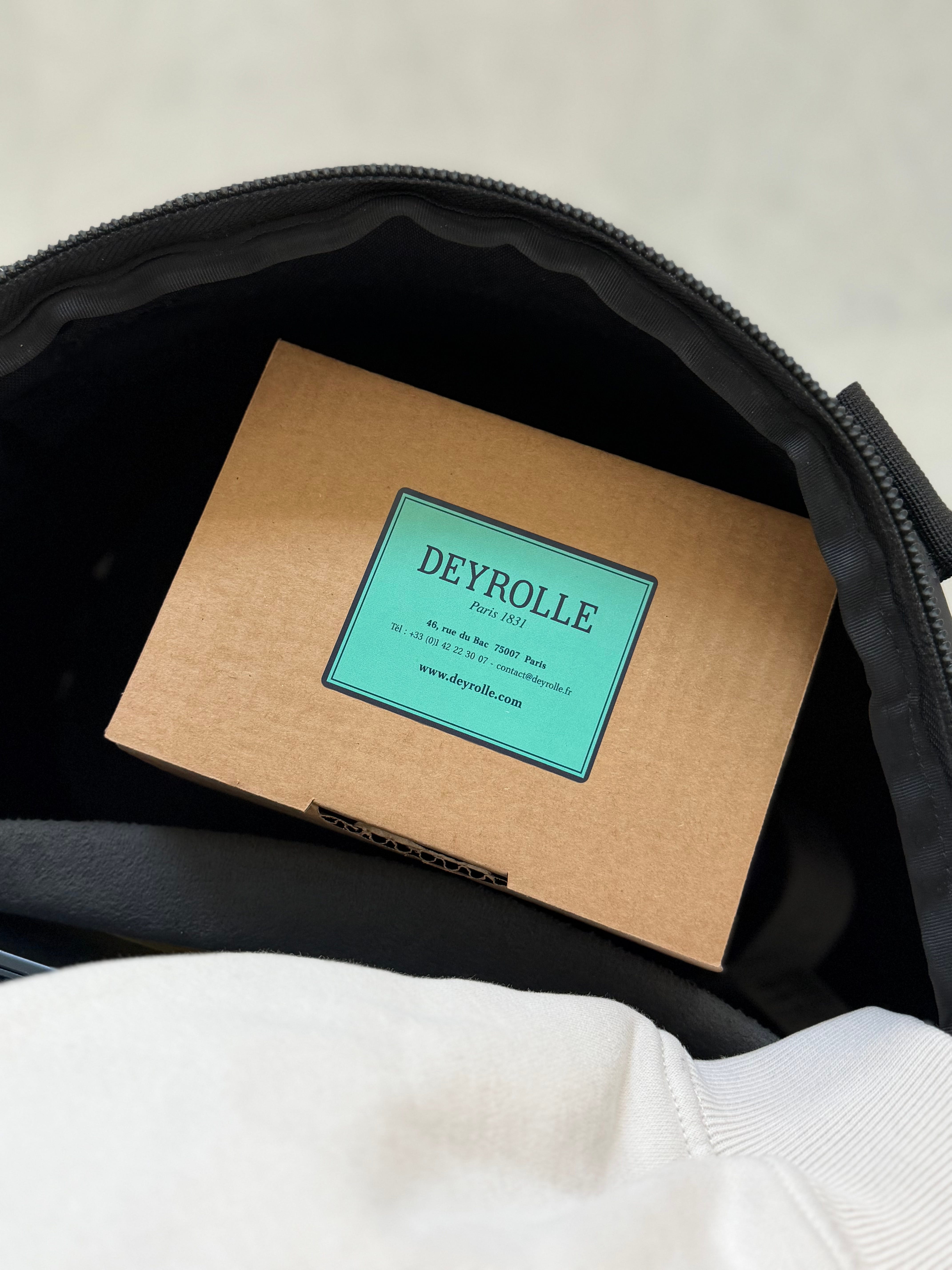
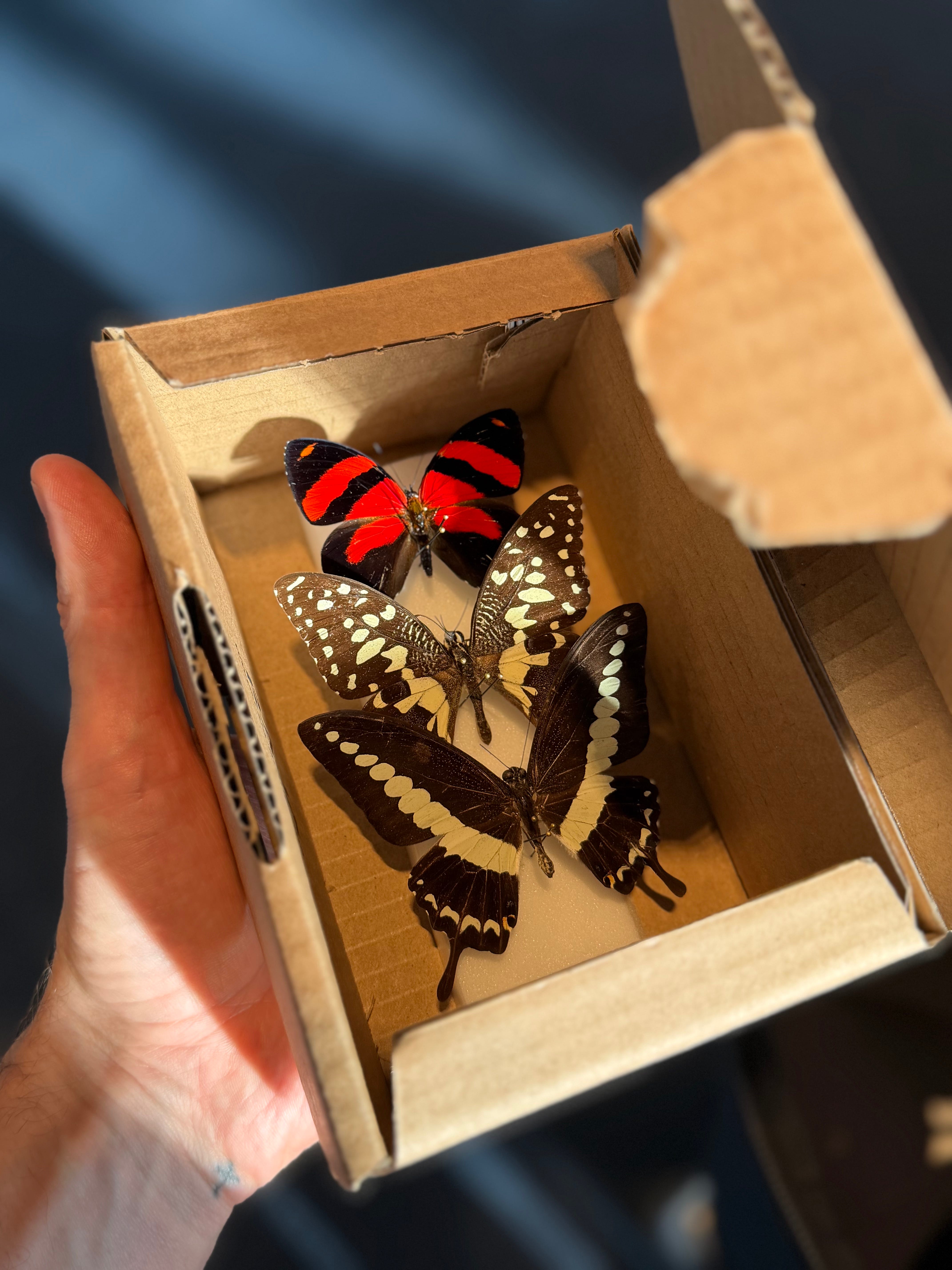
This last trip involved far more time than anyone should spend at Charles de Gaulle. Storms caused me to miss my connection to Marrakech, which left me with a very long layover and, apparently, a sense of purpose. The taxidermy butterflies I’d sourced in New York hadn’t arrived in time, so I sent a production assistant into Paris to Maison Deyrolle to buy replacements and bring them to me at the airport. At the time, this felt not only reasonable but urgent. So there I was, sitting at the gate, waiting for someone to arrive with a box of dead butterflies, as one does when one has made several interesting life choices.
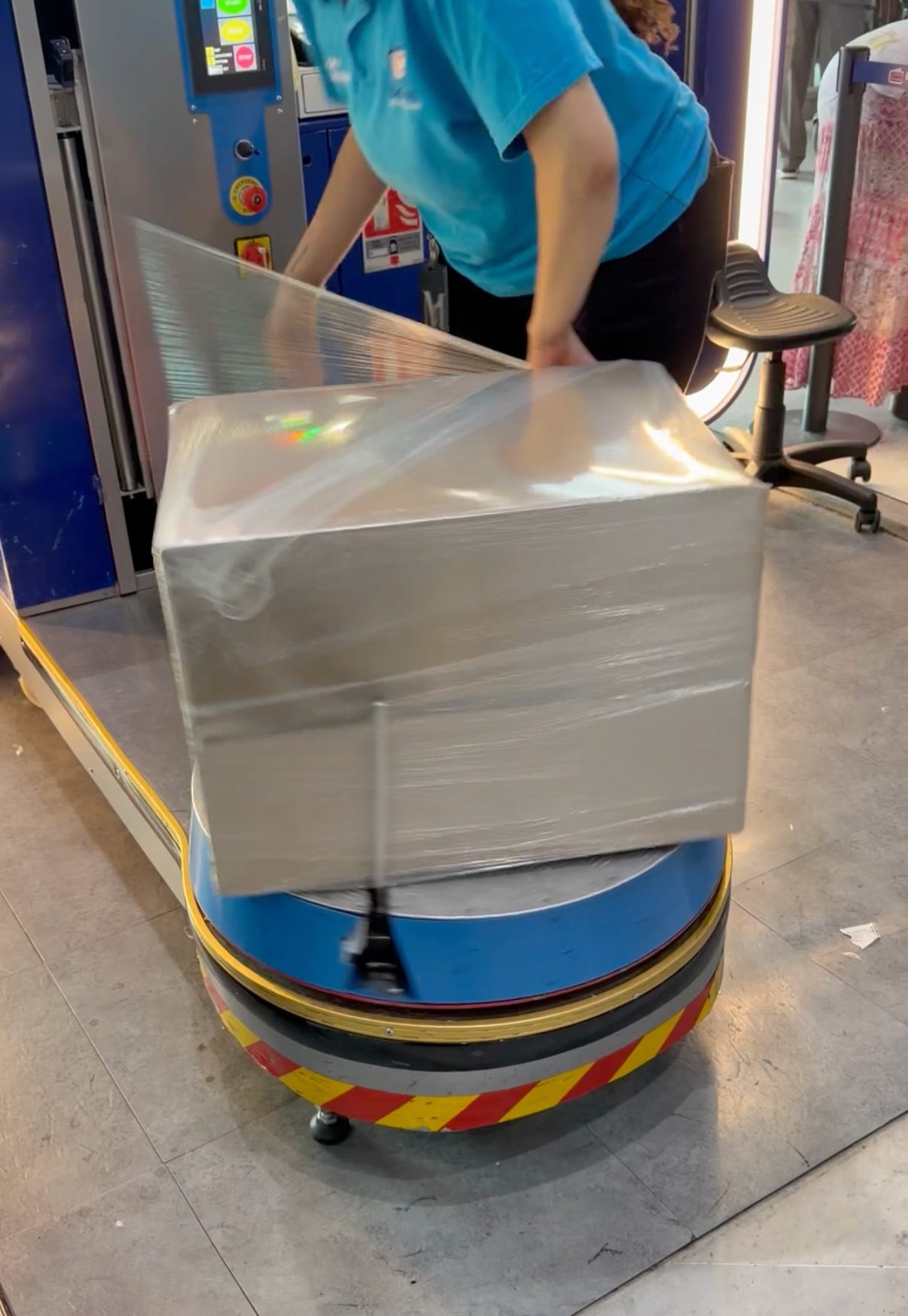
On the way home, I returned through the same airport carrying a stool inside a cardboard box. I had it wrapped in so much plastic that it looked less like furniture and more like evidence. It was my first time using the airport wrapping service. I felt embarrassed for perhaps eleven seconds, then watched the man add another layer and became extremely pleased with myself.
By then, I’d become the sort of person who could wait at an airport for dead butterflies and later pay to have a stool shrink-wrapped without finding either event especially strange. This seemed worth looking into.
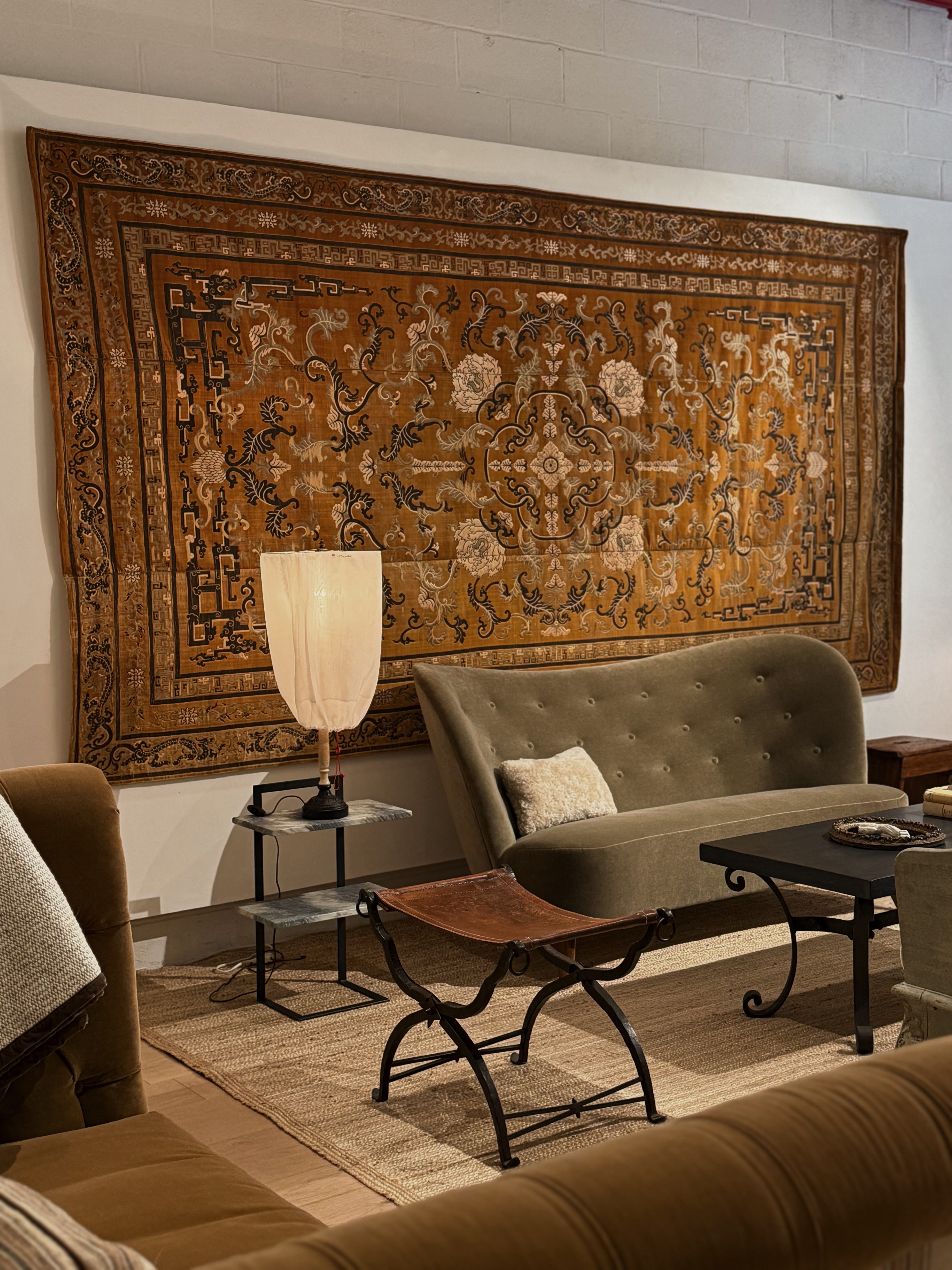
I’d also spent the last few weeks getting my apartment ready for a photoshoot, which is a very efficient way to lose faith in every decision you’ve ever made. Styling someone else’s home is wonderfully objective. Styling your own is like trying to give yourself a haircut. You suddenly distrust everything. A lamp you’ve loved for years begins to look overeager. You move the same chair fourteen times, only to discover it belonged exactly where it was. By day three, a bowl you’ve never questioned has become a referendum on your entire character.
And while I was moving everything around, I began noticing how many things in the apartment belonged to categories I’d once dismissed completely. Wallpaper. Decorative pillows. A properly tucked bed. Glass-top tables. Symmetry. Mixed metals. Even an orchid. The place had quietly become an archive of my reversals.
This made me laugh, partly because I’ve spent a career being asked what I like, what I don’t like and what I’d never do. The word never is irresistible when you’re younger. It gives the impression that you have standards, when sometimes what you have is limited information and a very firm tone of voice.
For a long time, I thought developing an eye meant becoming more certain. You’d see enough, learn enough and work enough that eventually your taste would settle into a perfect, recognizable shape. You’d know exactly who you were. You’d stop making mistakes. You might even be able to order a sofa without entering a brief spiritual crisis.
I’m less convinced of that now.
The homes I keep thinking about rarely belong to people who appear to have made one decision about themselves and then defended it forever. They’re full of contradictions. Things bought years apart. An inherited chair beside something strange and new. A beautiful mistake that somehow became essential. They don’t feel inconsistent. They feel alive.
Maybe that’s what a well-loved home becomes over time. Not a museum of certainty, but an archive of everything we’ve been willing to learn, and everything we finally stopped pretending we didn’t like.
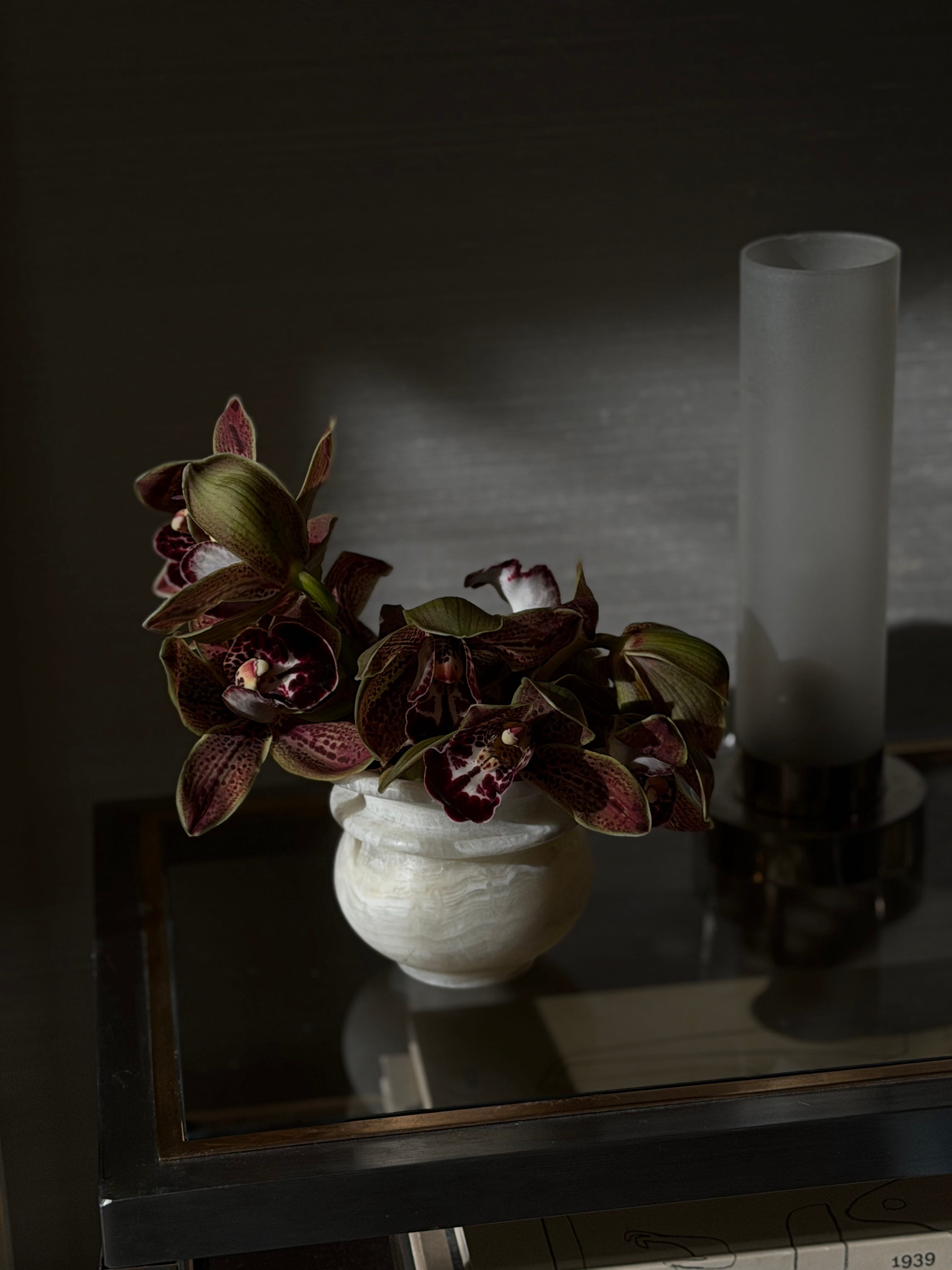
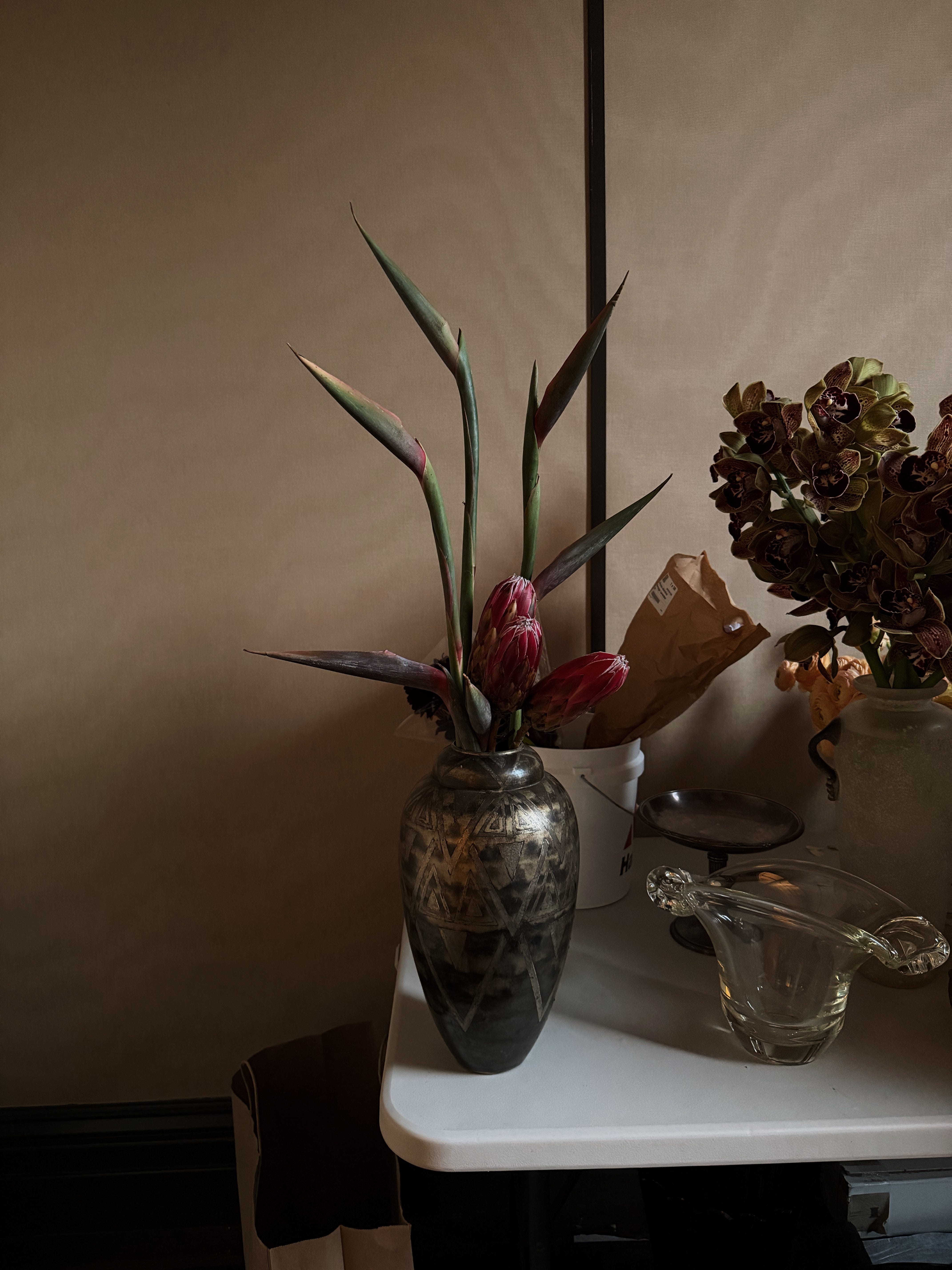
For years, I thought orchids belonged in hotel lobbies and corporate reception desks. They always seemed slightly overdressed, surrounded by glossy leaves, decorative moss and enough ceremony to announce themselves before you’d even entered the room. I associated them with places where the flowers were replaced before they had the opportunity to do anything embarrassing.
Then I saw a Grammatophyllum scriptum “Leopard” in one of my chicest clients’ homes in Gramercy. It was spotted and strange and completely arresting, but it wasn’t performing. It was simply there, managing to look both prehistoric and elegant, which is a difficult combination for any of us to pull off.
Around the same time, I kept finding myself using single orchid stems while styling shoots with RW Guild. One stem, one vessel, no elaborate supporting cast. They looked less like arrangements and more like drawings.
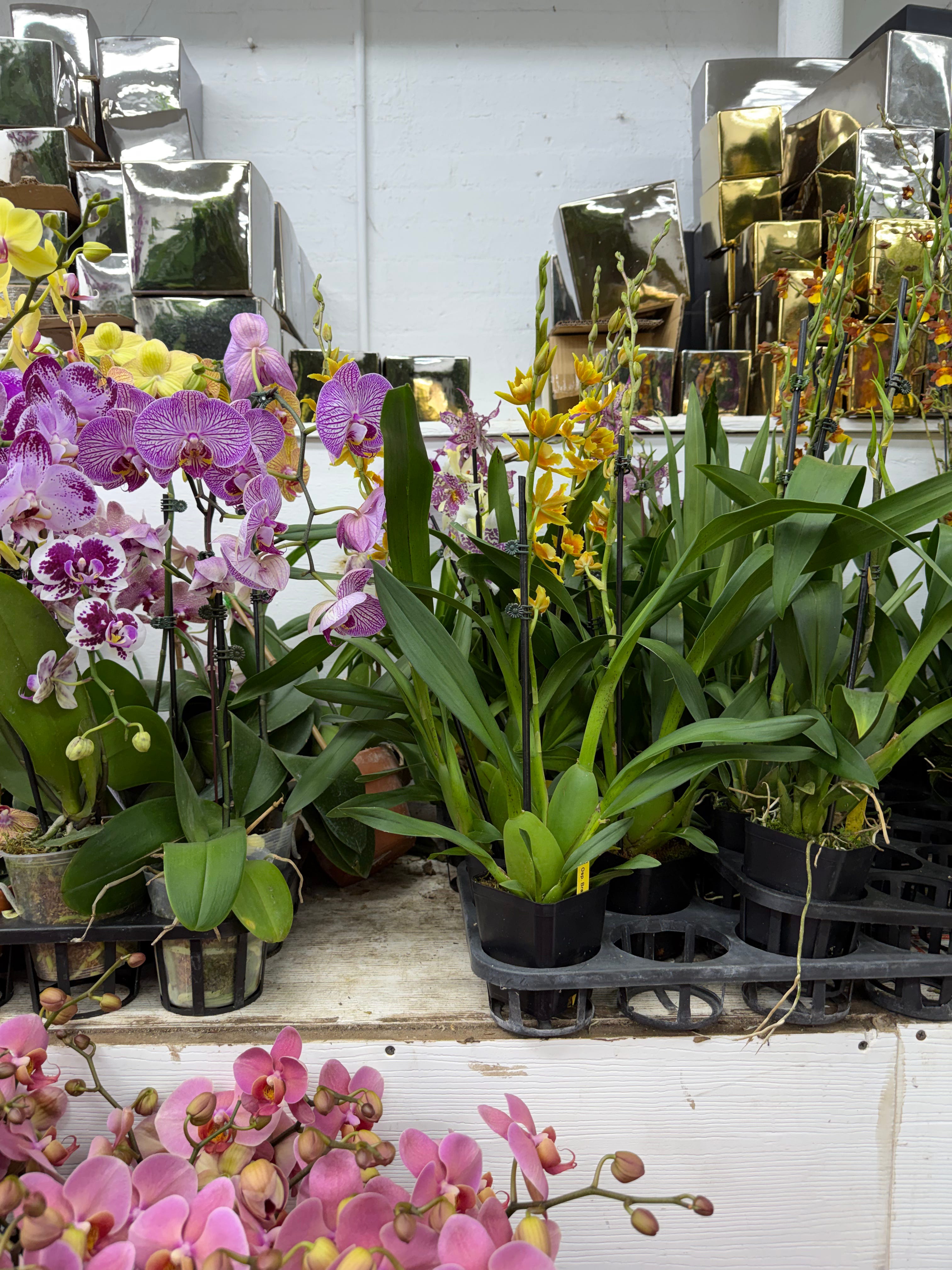
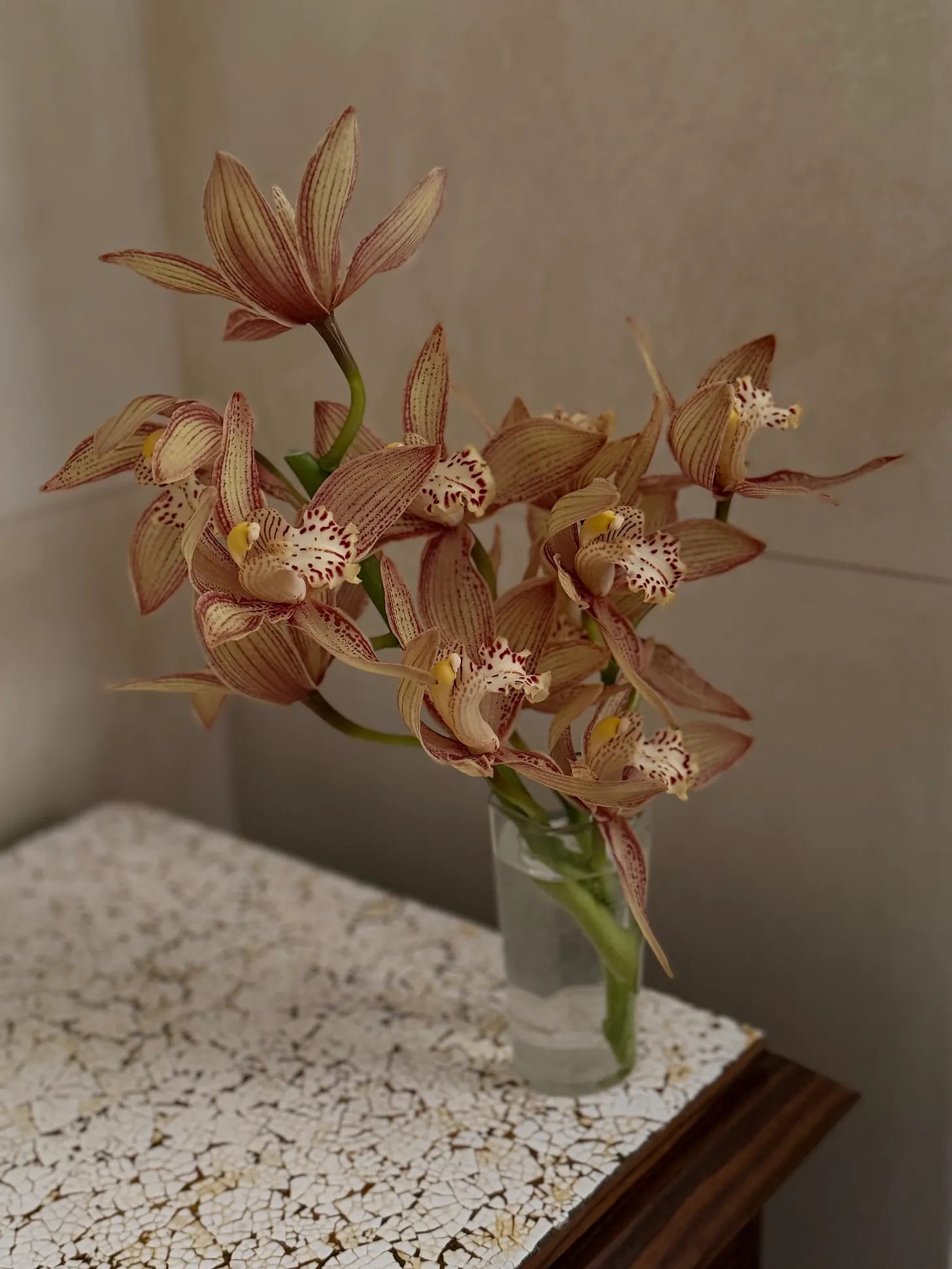
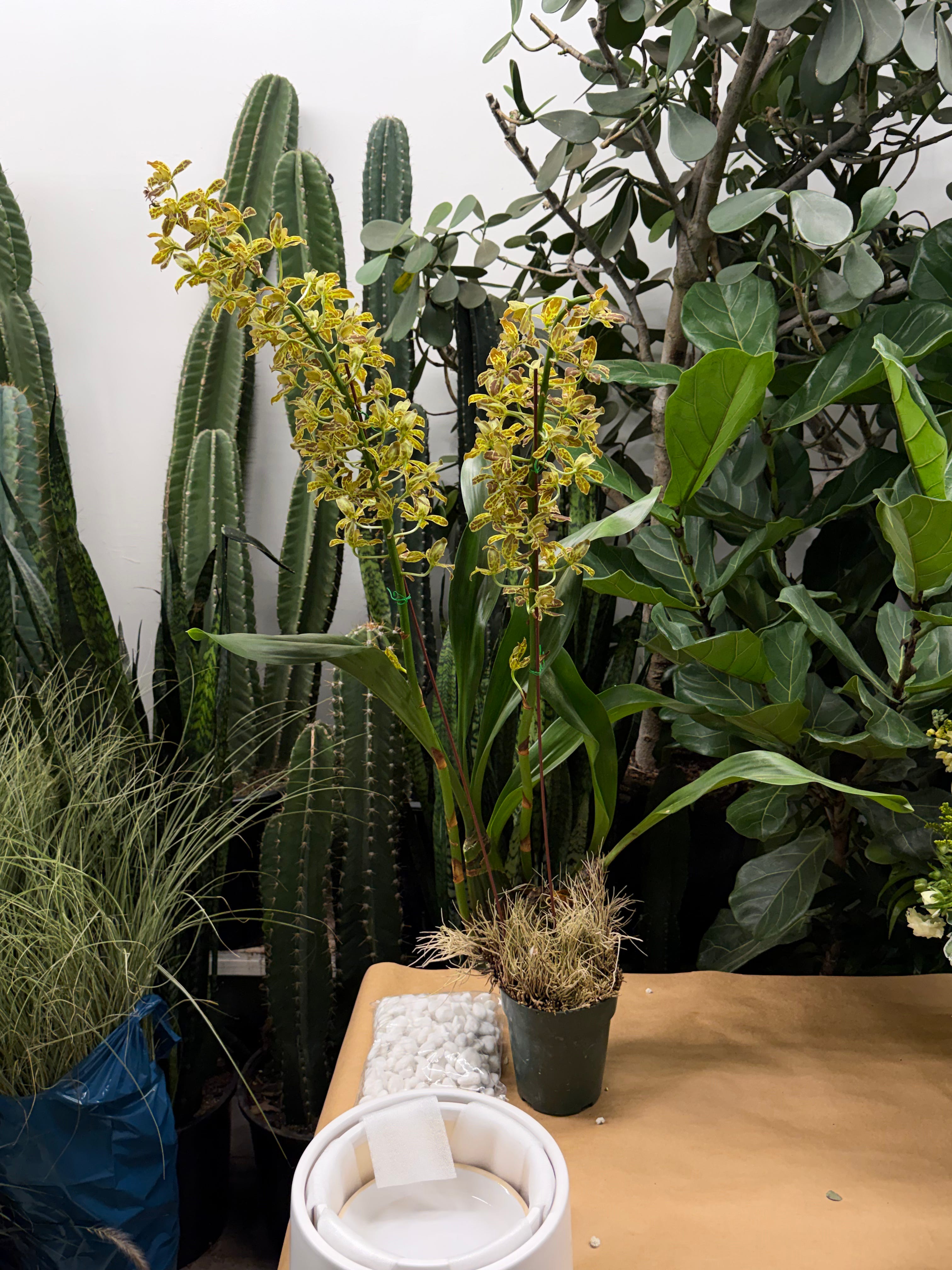
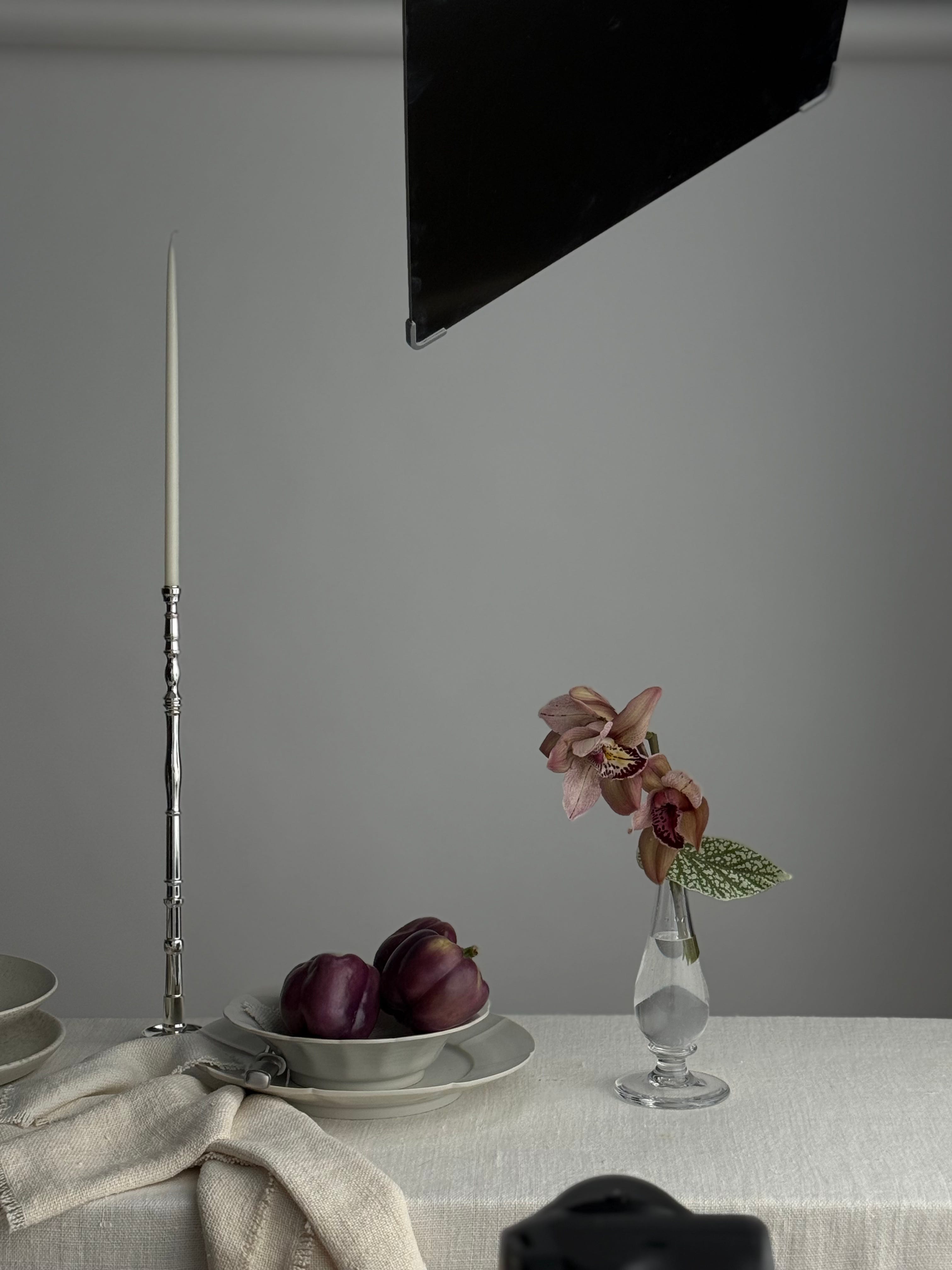
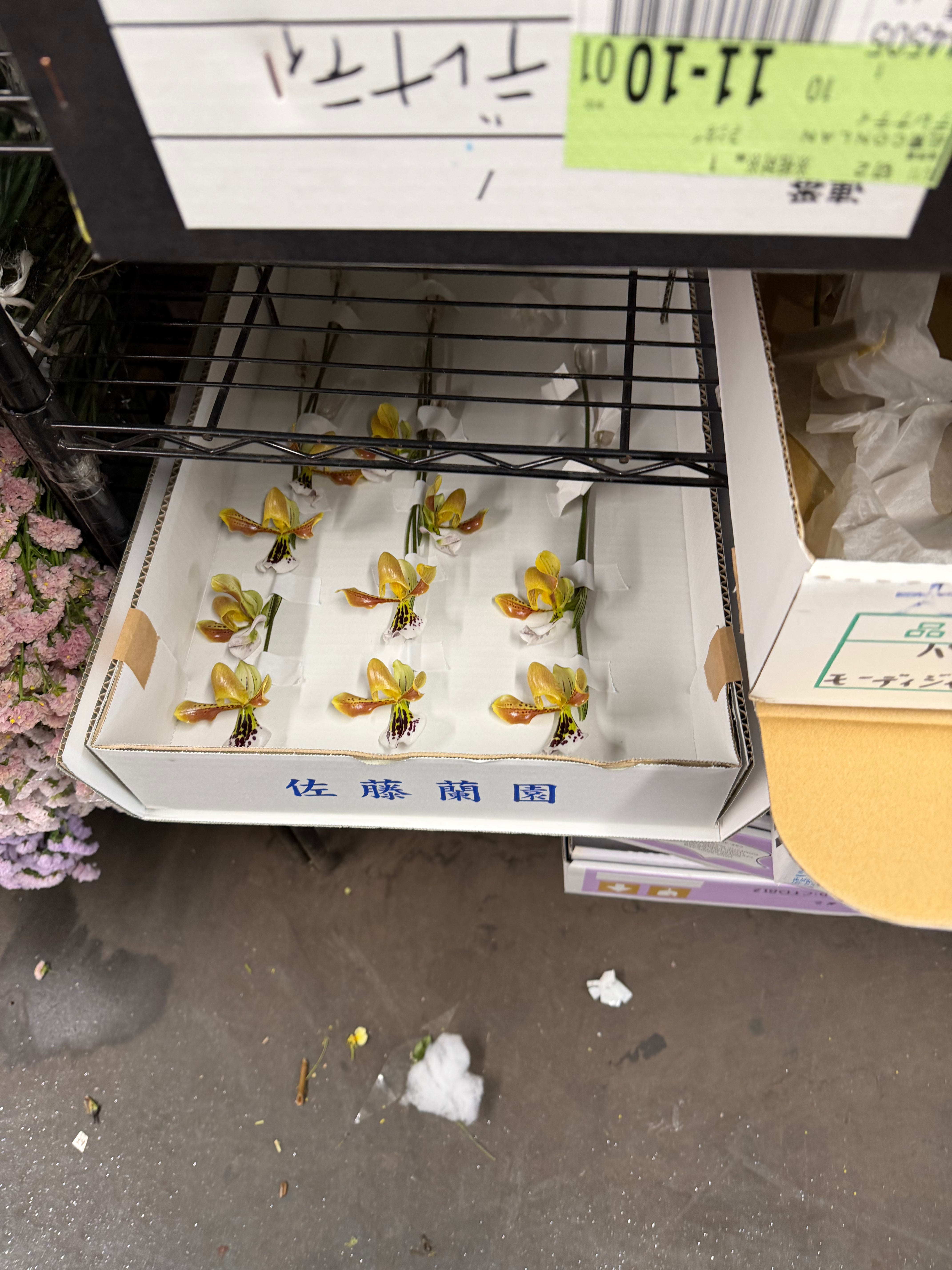
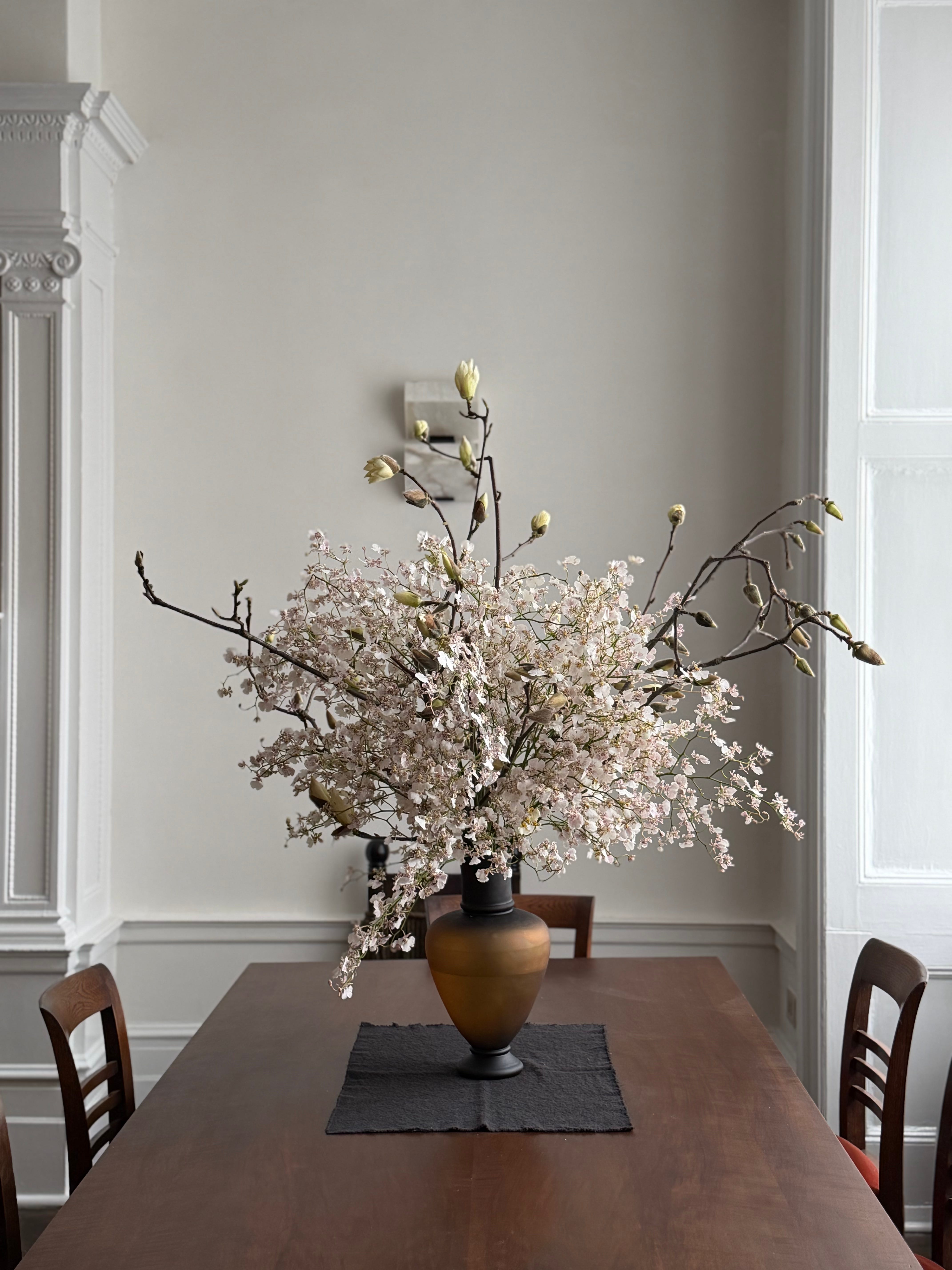
I realized I hadn’t disliked orchids at all. I’d disliked what we’d been asking them to do.
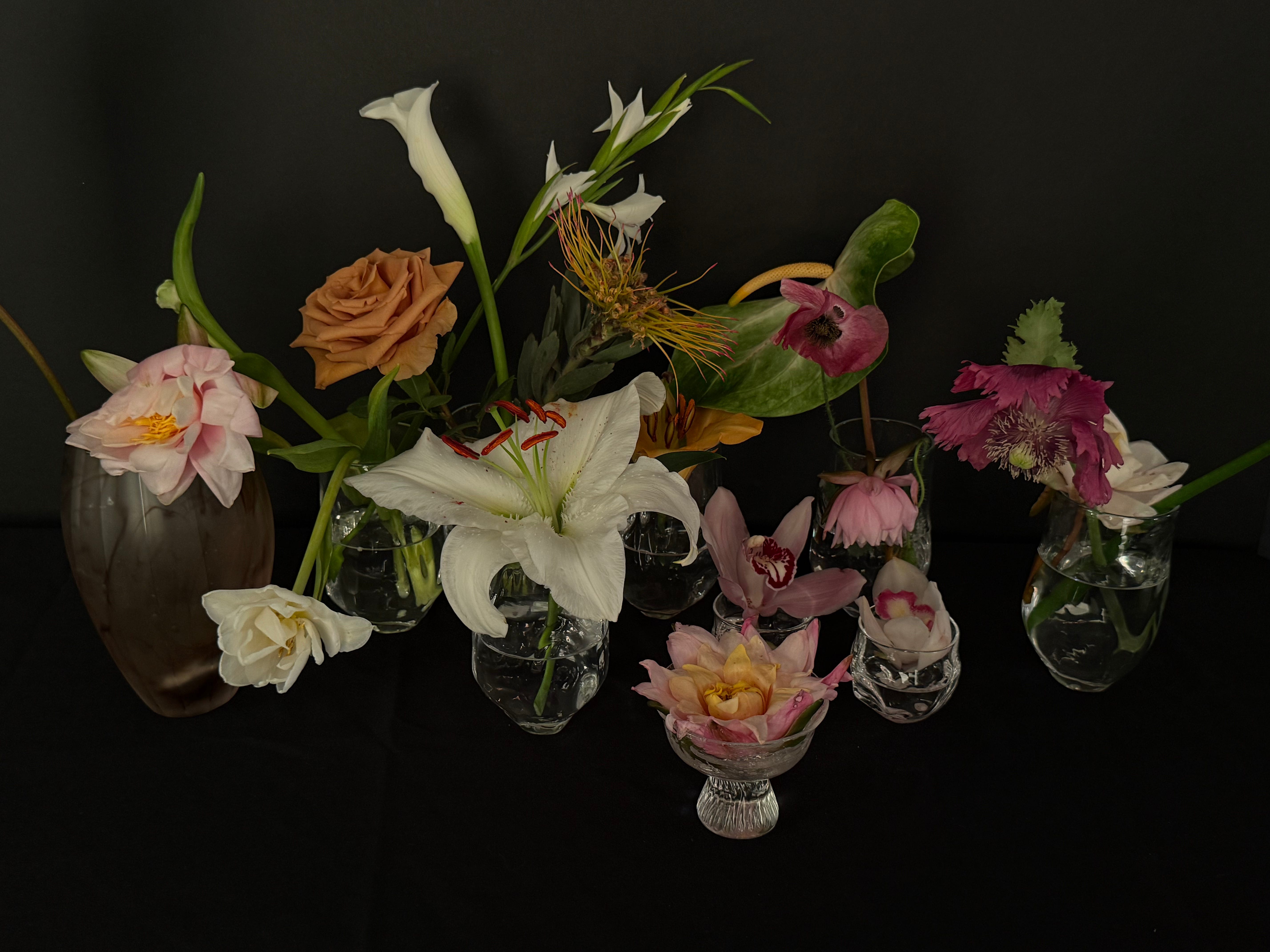
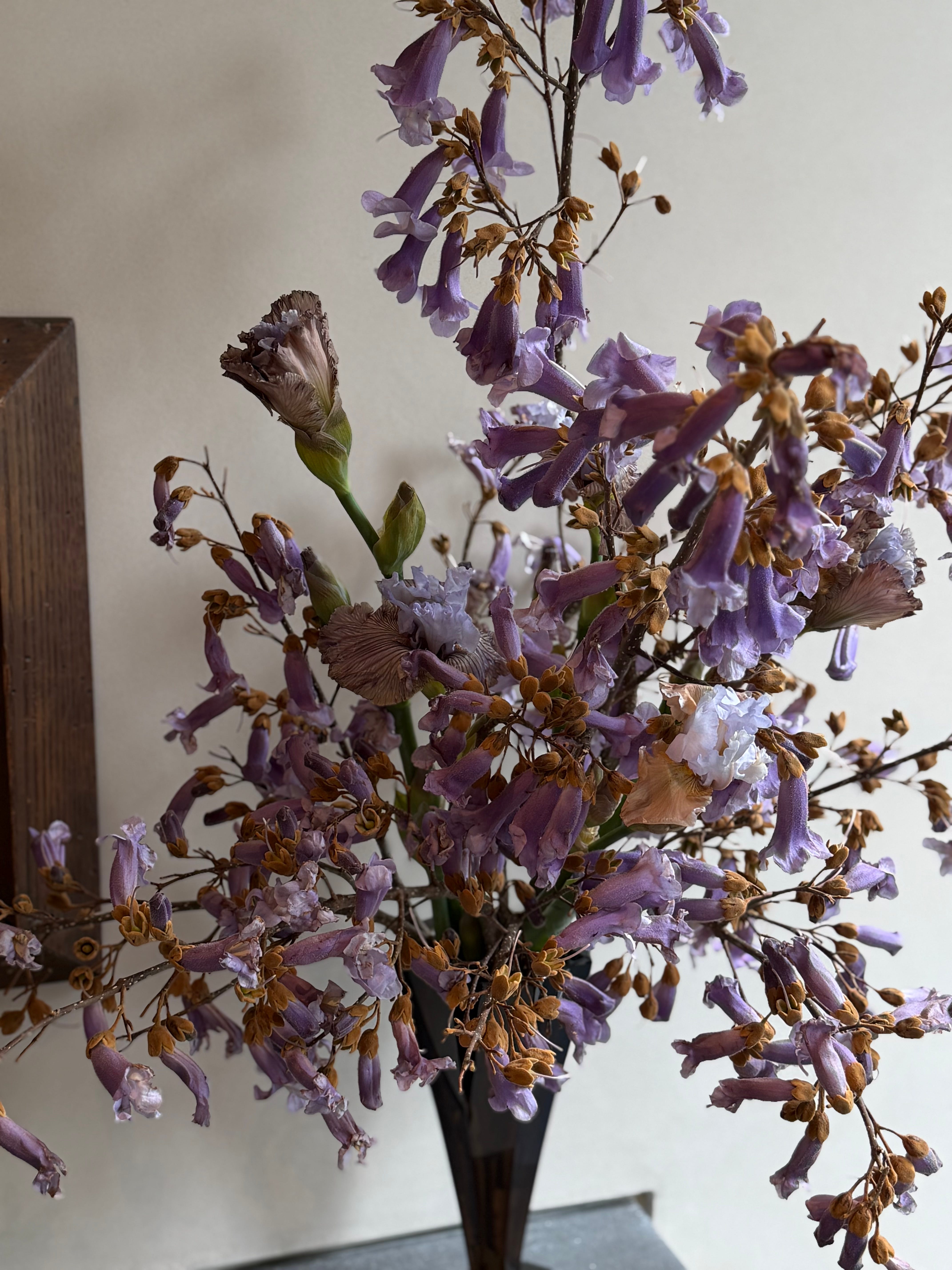
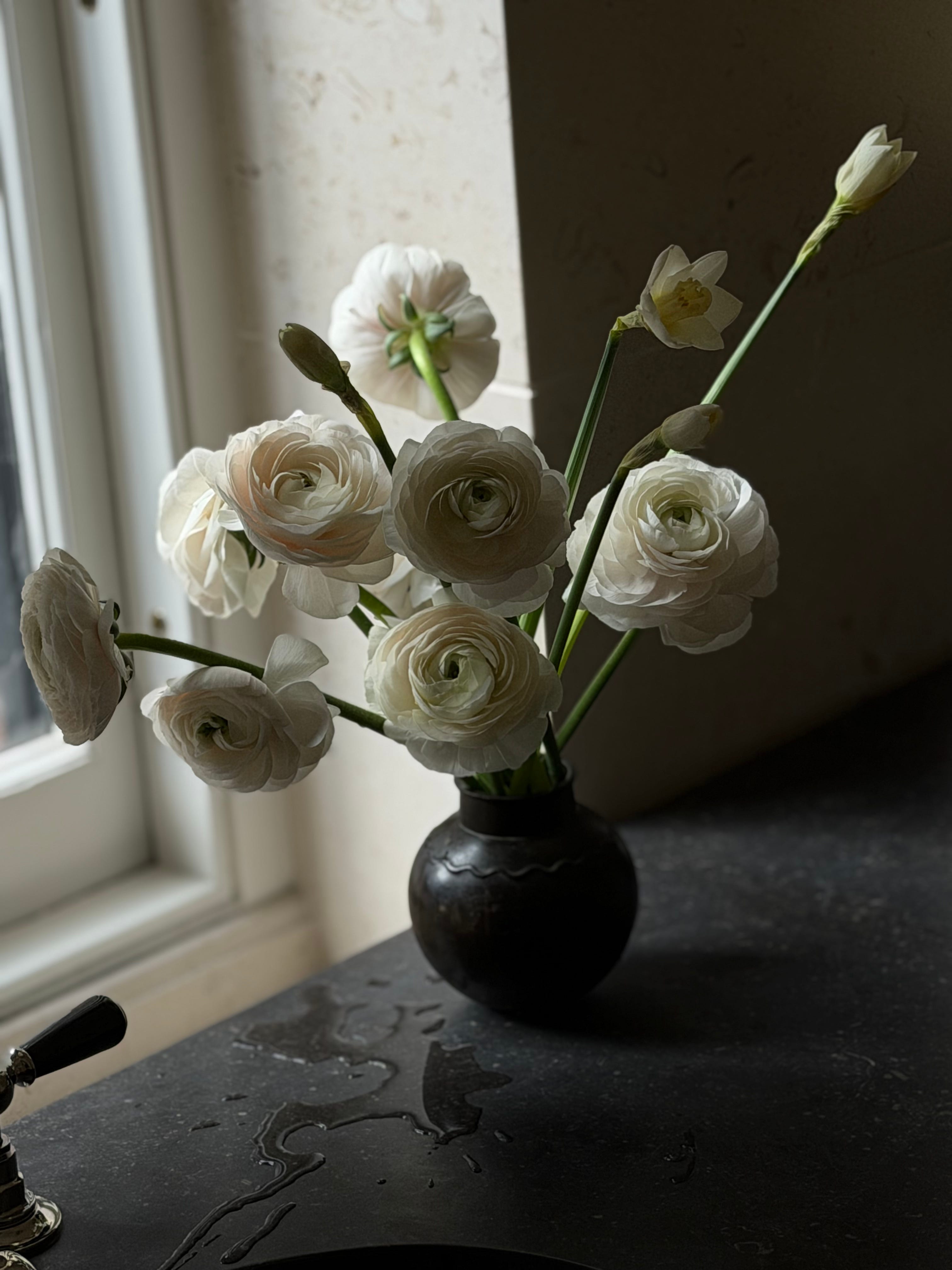
I’ve changed my mind about mixing varieties of flowers, too. For years, I was almost doctrinaire about using one kind at a time. One mass of tulips. One branch of quince. One enormous chrysanthemum allowed to carry the entire emotional burden of the room. Mixing varieties felt busy to me, or worse, indecisive. Like the arrangement hadn’t chosen a point of view.
Lately, I’ve found myself wanting flowers to disagree a little. A branch beside something soft. An orchid with a flower that has no business being near an orchid. Different shapes, different gestures, a few things leaning away from one another as though the conversation has become mildly tense. When it works, it feels less like an arrangement and more like something gathered from a garden, where nothing has been told to match and everything somehow belongs.
I still need one thing to lead. I’m not advocating floral anarchy. But I’ve stopped believing that harmony requires sameness. Sometimes the most alive arrangements are the ones where each flower is allowed to remain entirely itself.
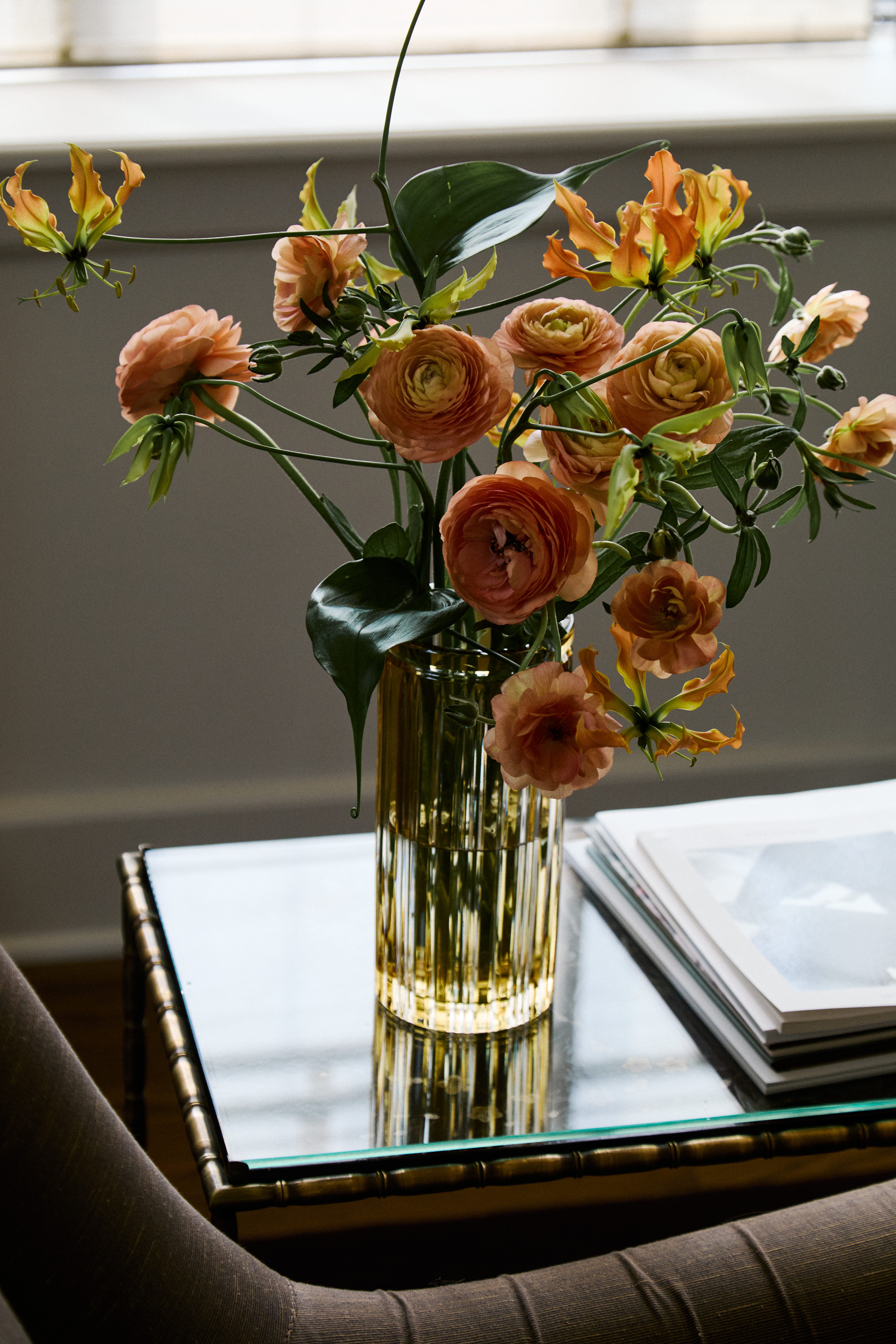
This has turned out to be inconveniently true of many things. Sometimes I dismiss the object when what I’m really reacting to is the context. I decide I hate a color because I’ve only seen it used badly. I swear off a fabric because it reminds me of a waiting room. I blame the decorative pillow when the real culprit is the seven decorative pillows behind it, all karate-chopped into submission.
I owe decorative pillows an apology too. There was a period when I thought every sofa should simply fend for itself. Pillows felt fussy and unnecessary, little upholstered errands that had to be moved every time you wanted to sit down. I still don’t think a sofa needs enough cushions to qualify as a ball pit, but one beautiful pillow can change the temperature of a room. It can bring in a fabric you wouldn’t want six yards of, soften something severe or introduce a color that only needs to speak once.
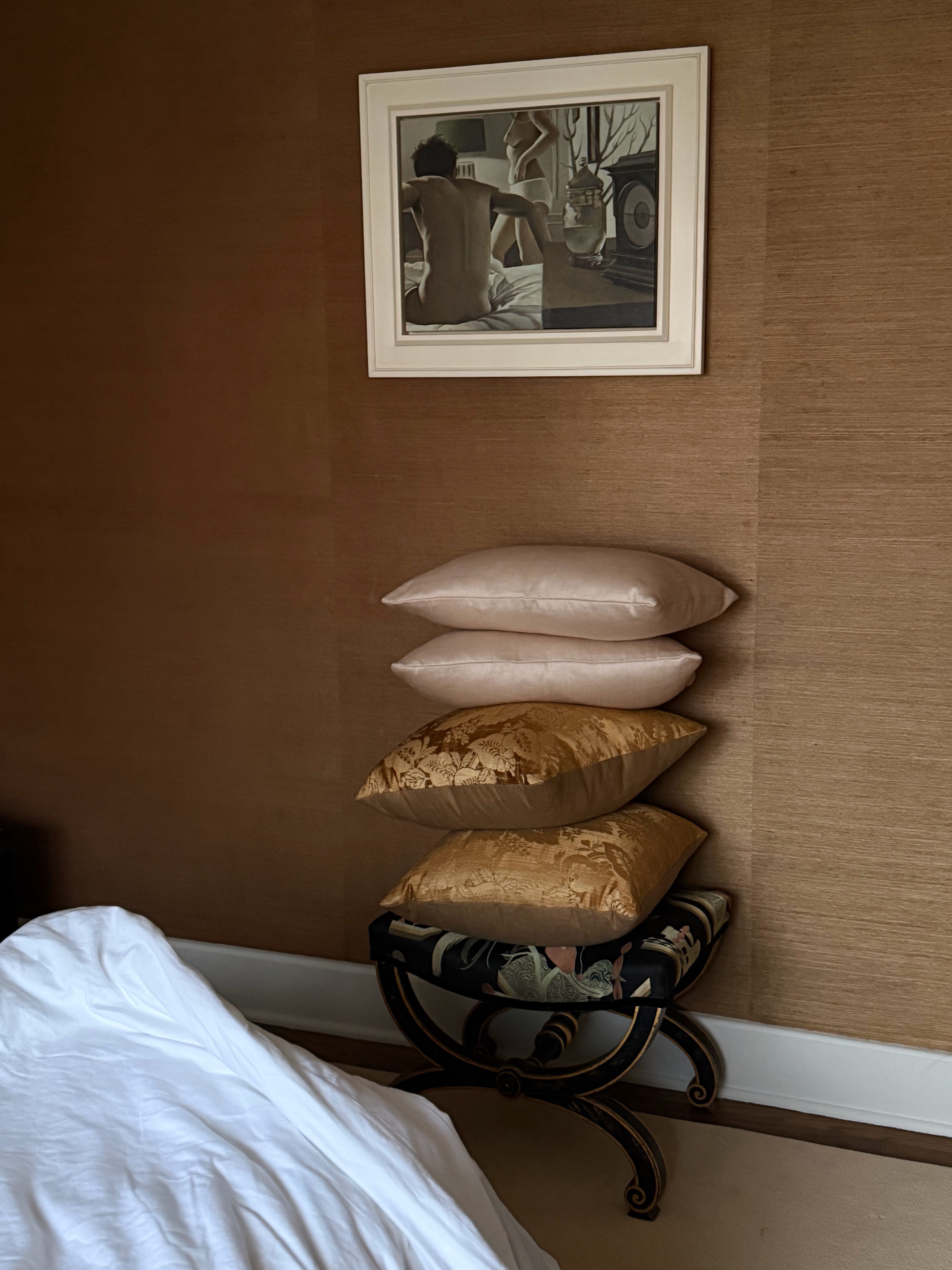
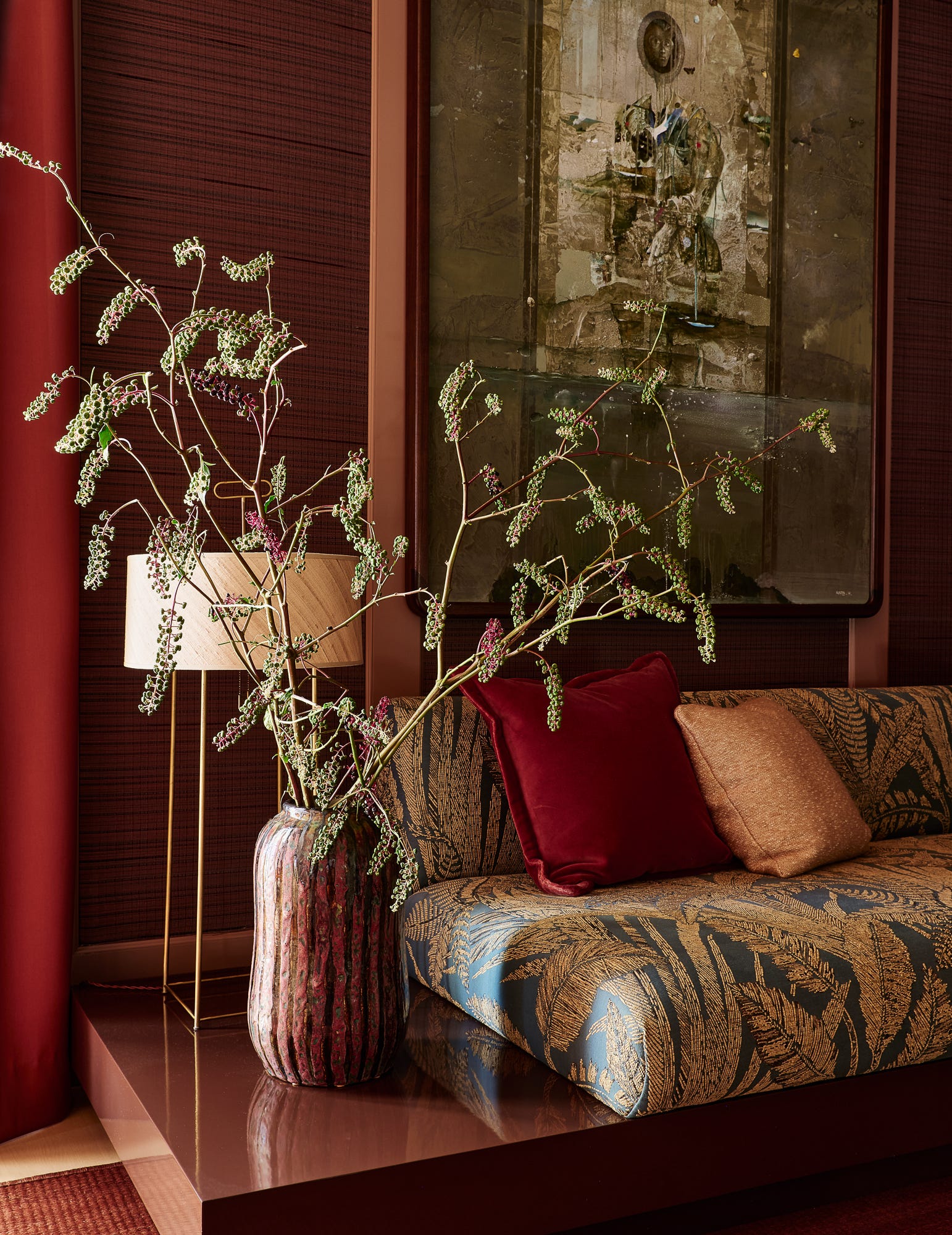
The answer wasn’t no pillows. It was fewer, better pillows, which is annoyingly often the answer.
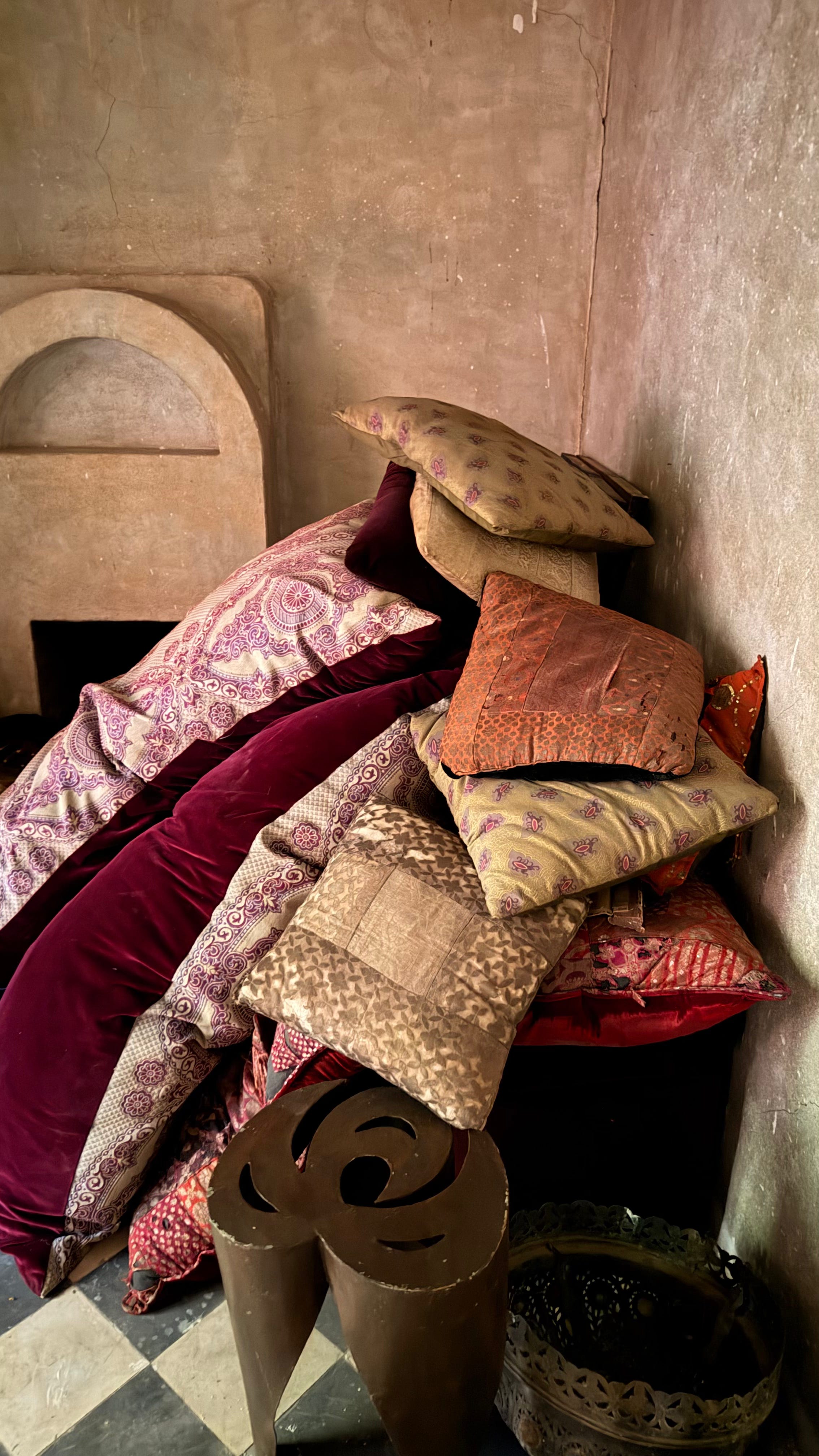
Morocco loosened something else in me. I’ve always believed in restraint, and I still do, but restraint can become a kind of nervousness if you’re not careful. In Morocco, textiles are layered with a generosity I find deeply moving. Rugs sit over other rugs. Blankets cover cushions. Embroidery meets rough wool, stripes meet checks, and colors that would’ve been separated into entirely different presentations are somehow having dinner together.
Nothing feels accidental, but nothing feels frightened either.
It reminded me that layering doesn’t necessarily mean clutter. Sometimes it means warmth. Sometimes it’s the thing that makes a room feel gathered rather than arranged. There’s an ease to the overlap, as though no one has spent the afternoon anxiously measuring the amount of negative space around a pillow.
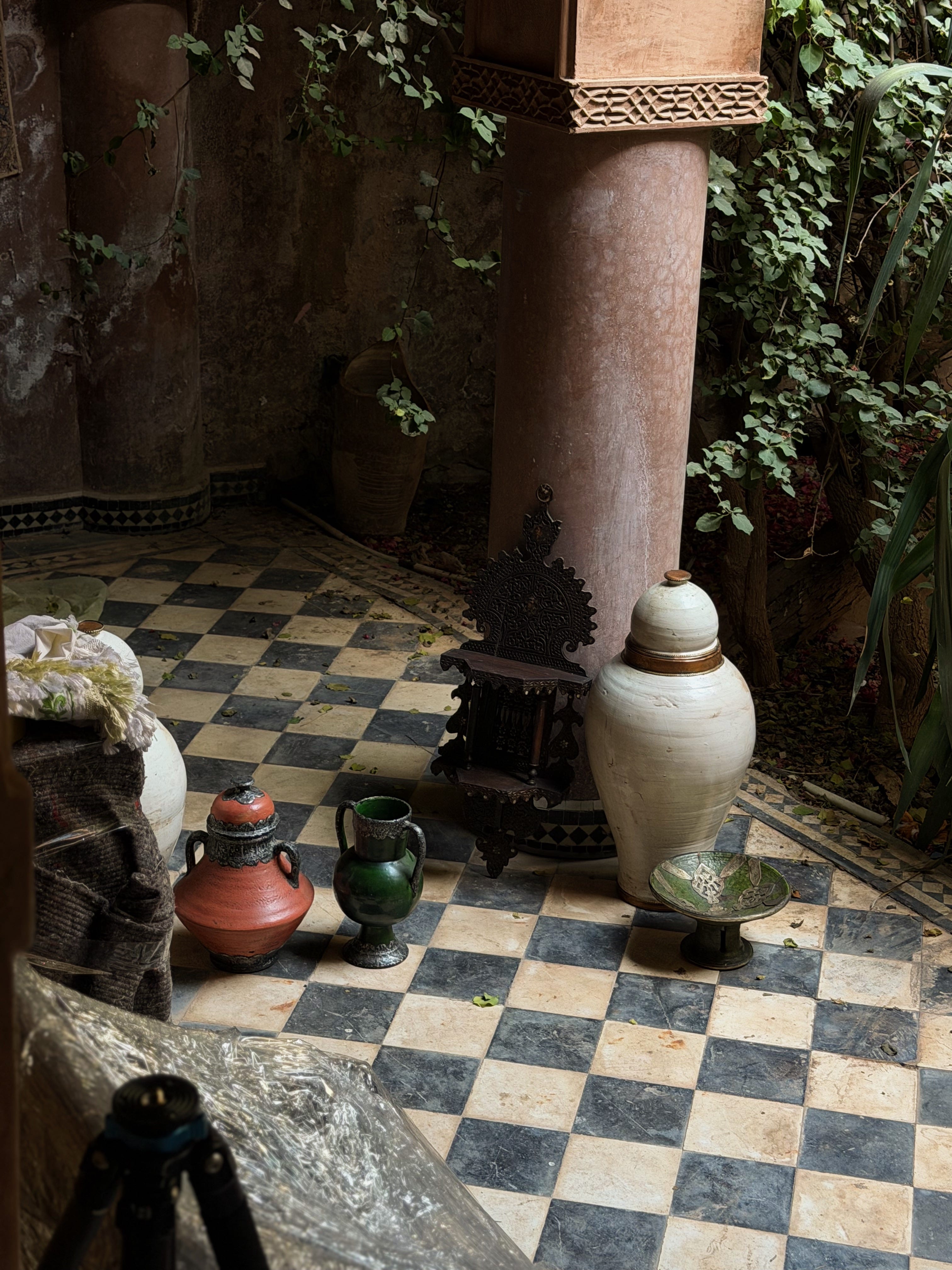
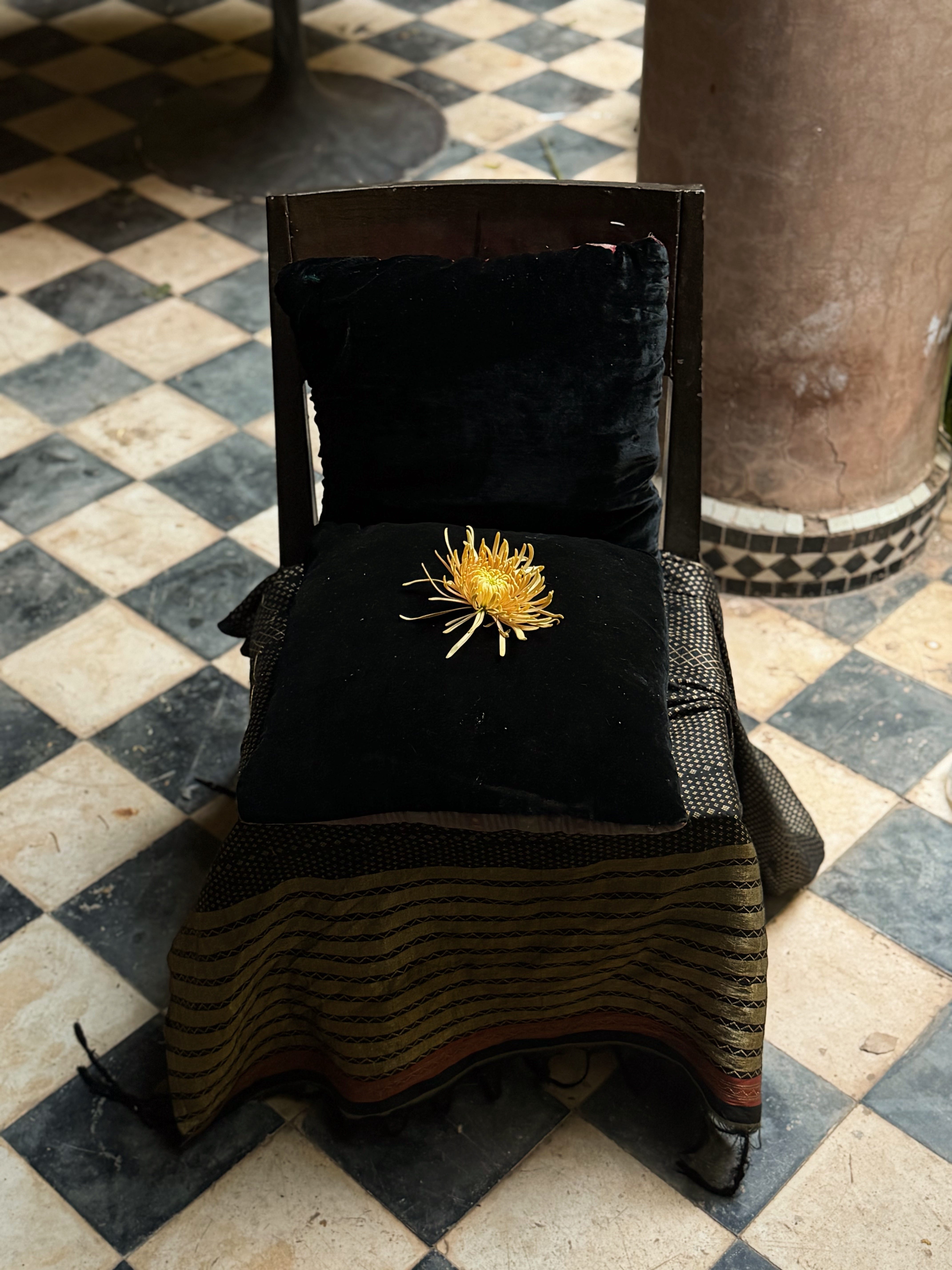
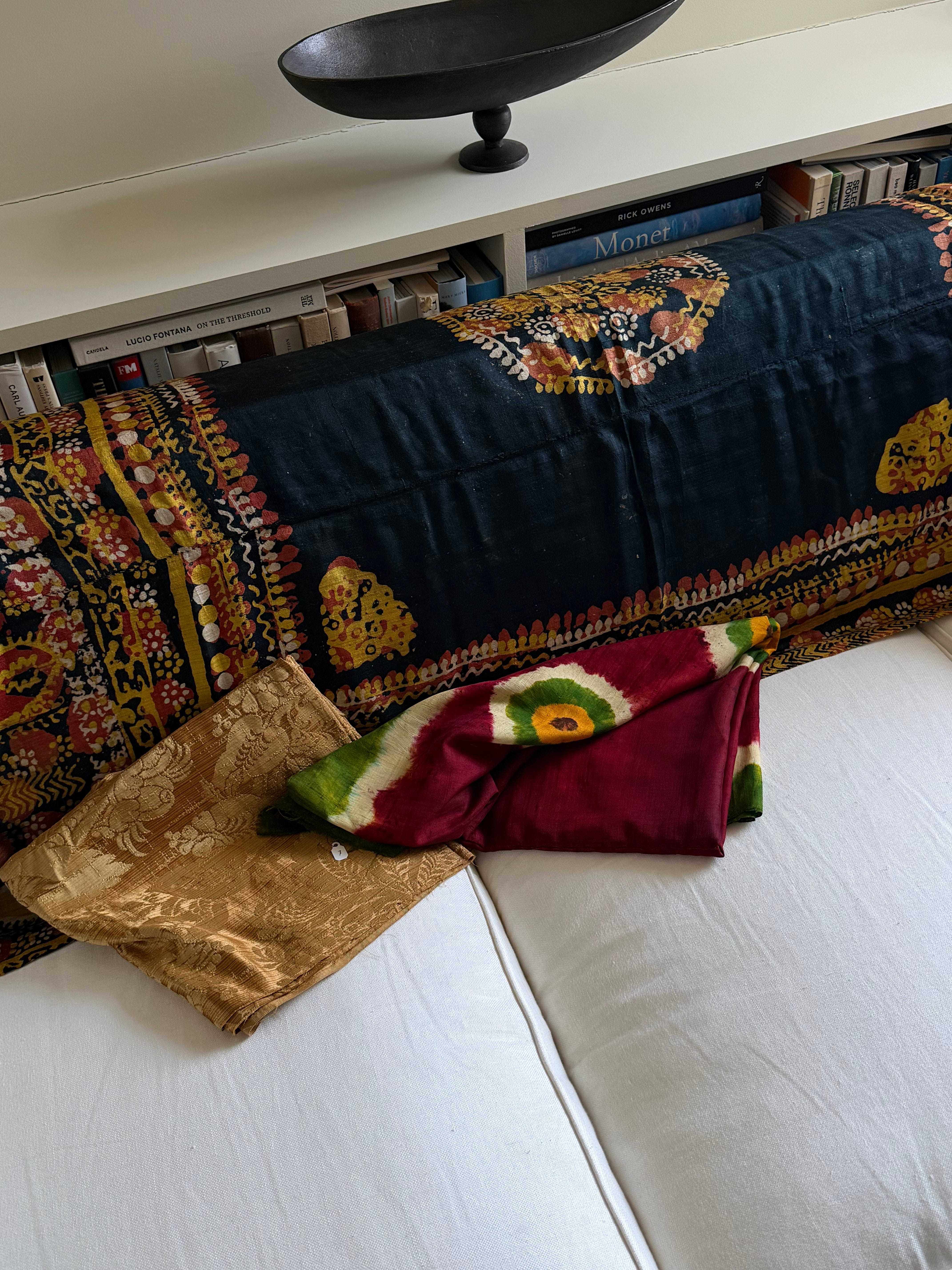
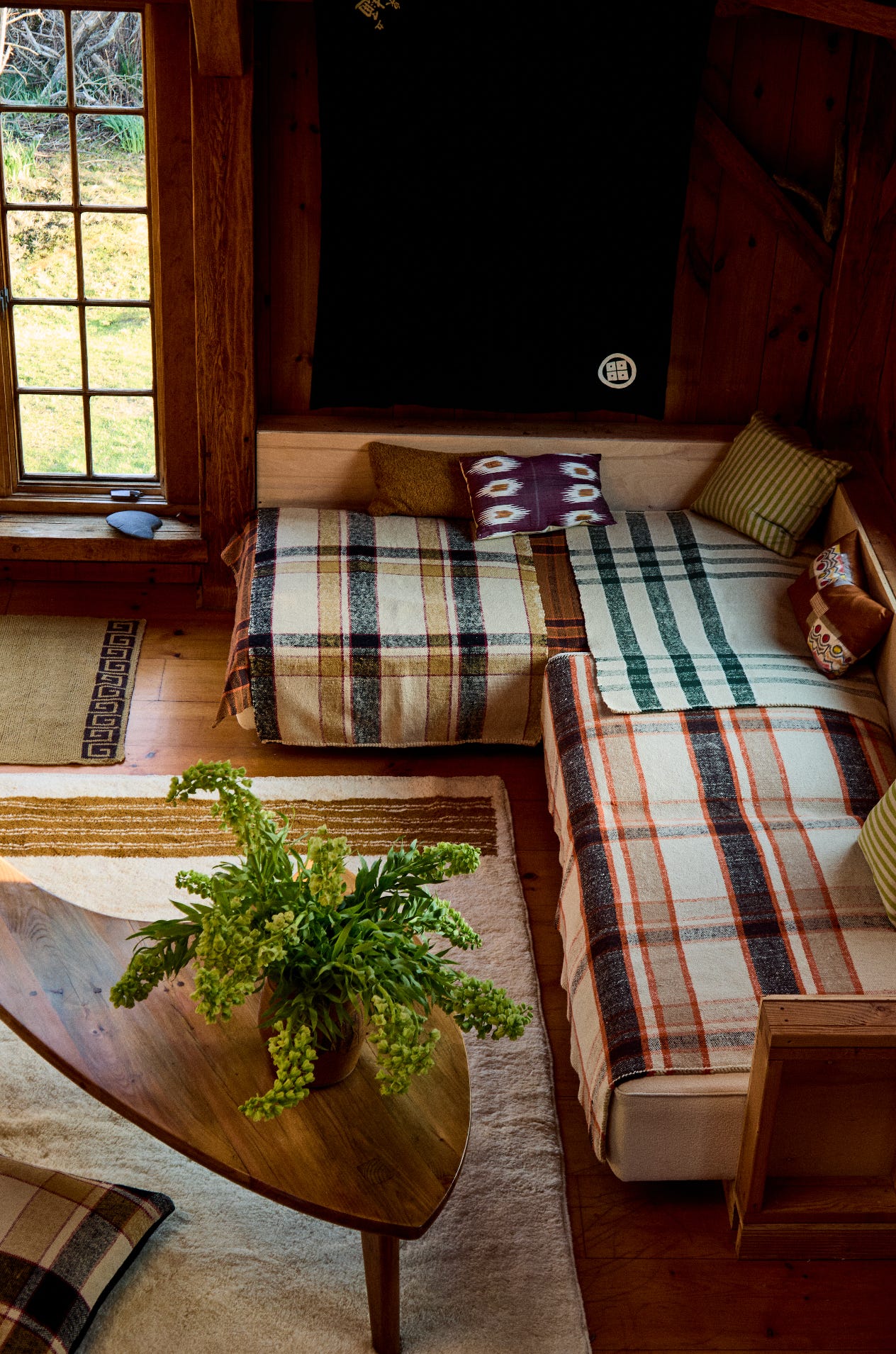
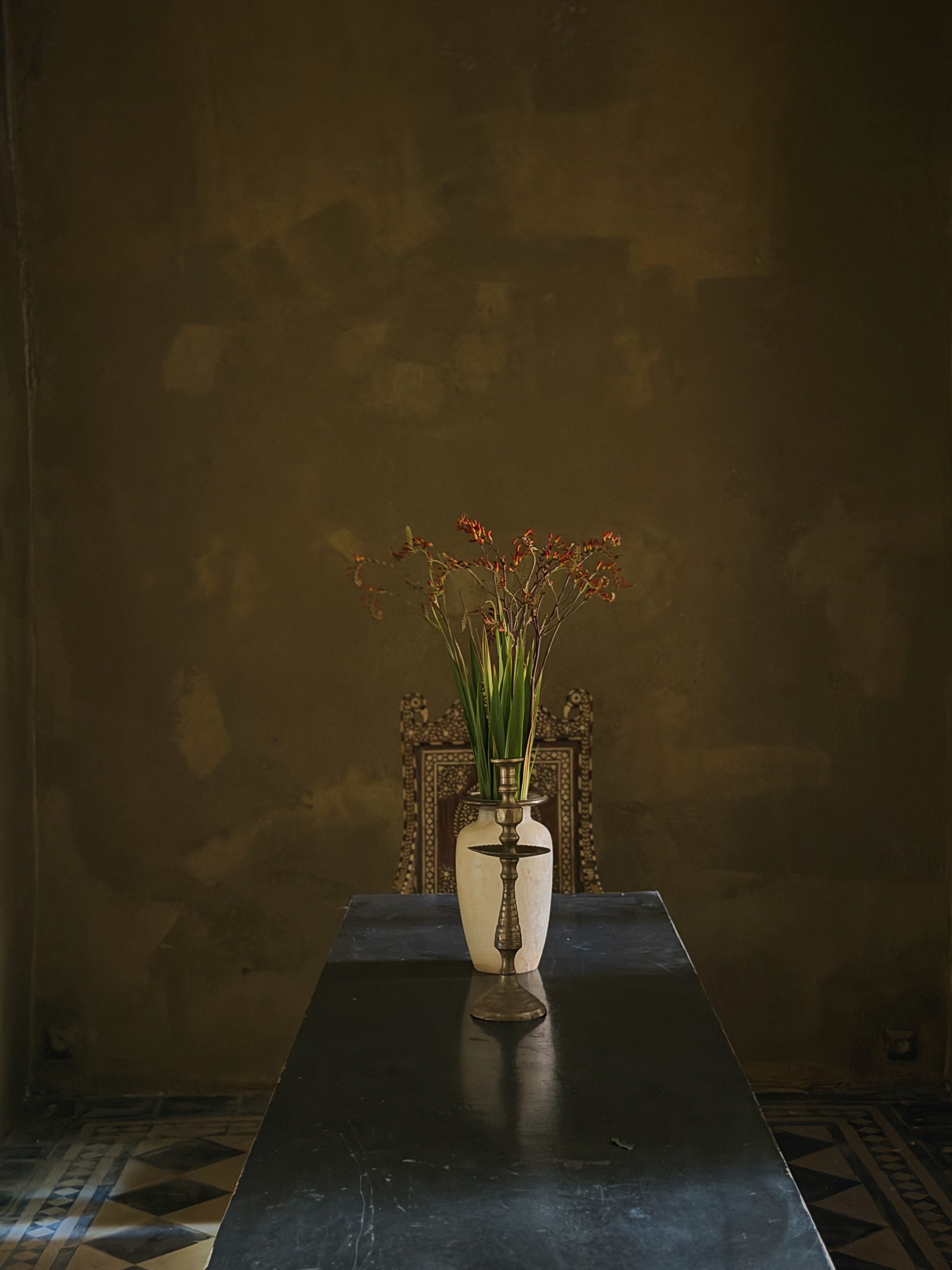
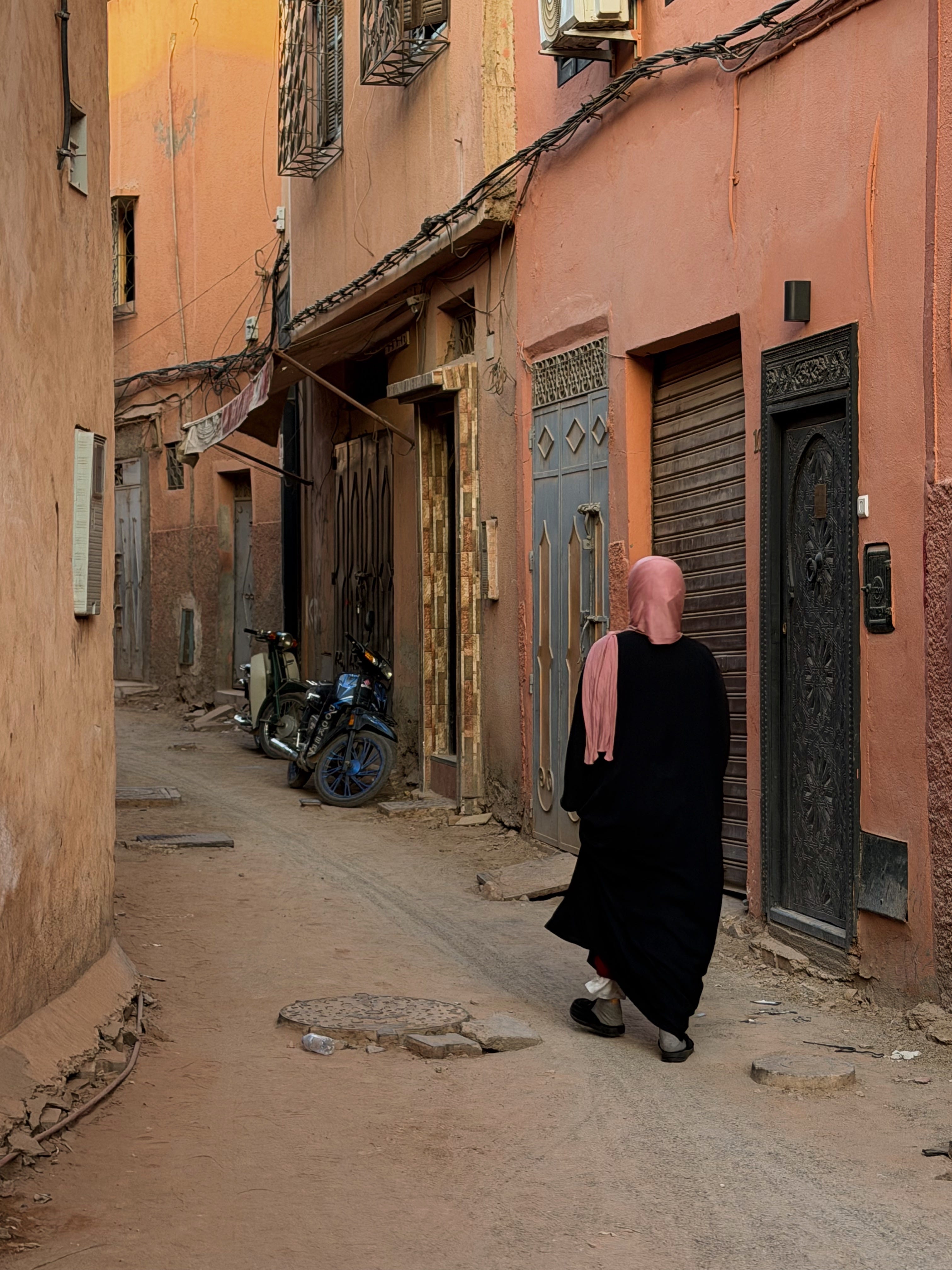
I came home wanting to let things touch more.
Travel does this to me. I leave thinking I need a change of scenery and return with my instincts slightly rearranged. Paris has made me want to tuck my bed. Morocco made me want another textile. A client in Gramercy made me reconsider orchids. None of this was on an itinerary, which is probably why any of it worked.
Maybe the best trips don’t just fill your suitcase. They quietly give you permission to become less sure of yourself.
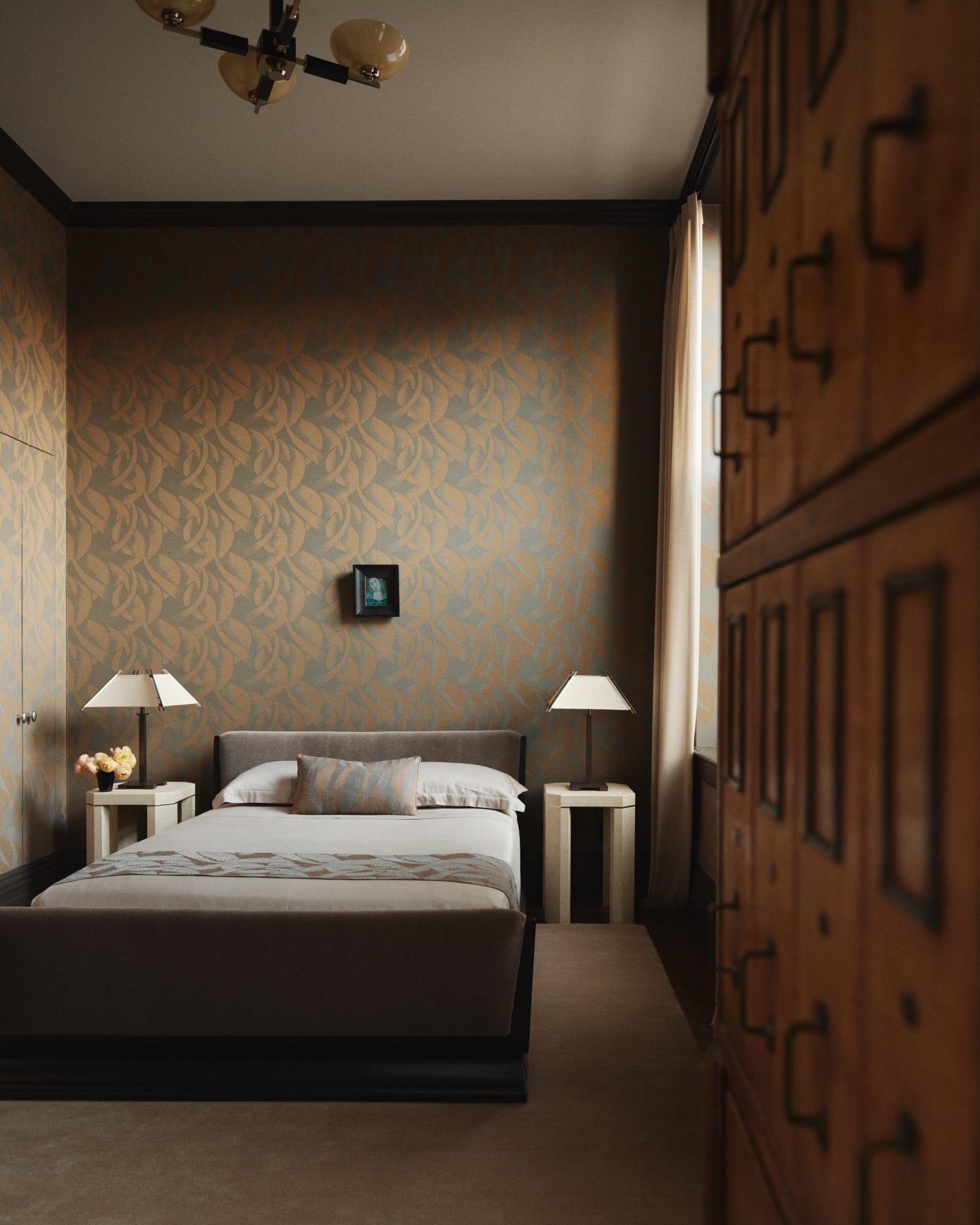
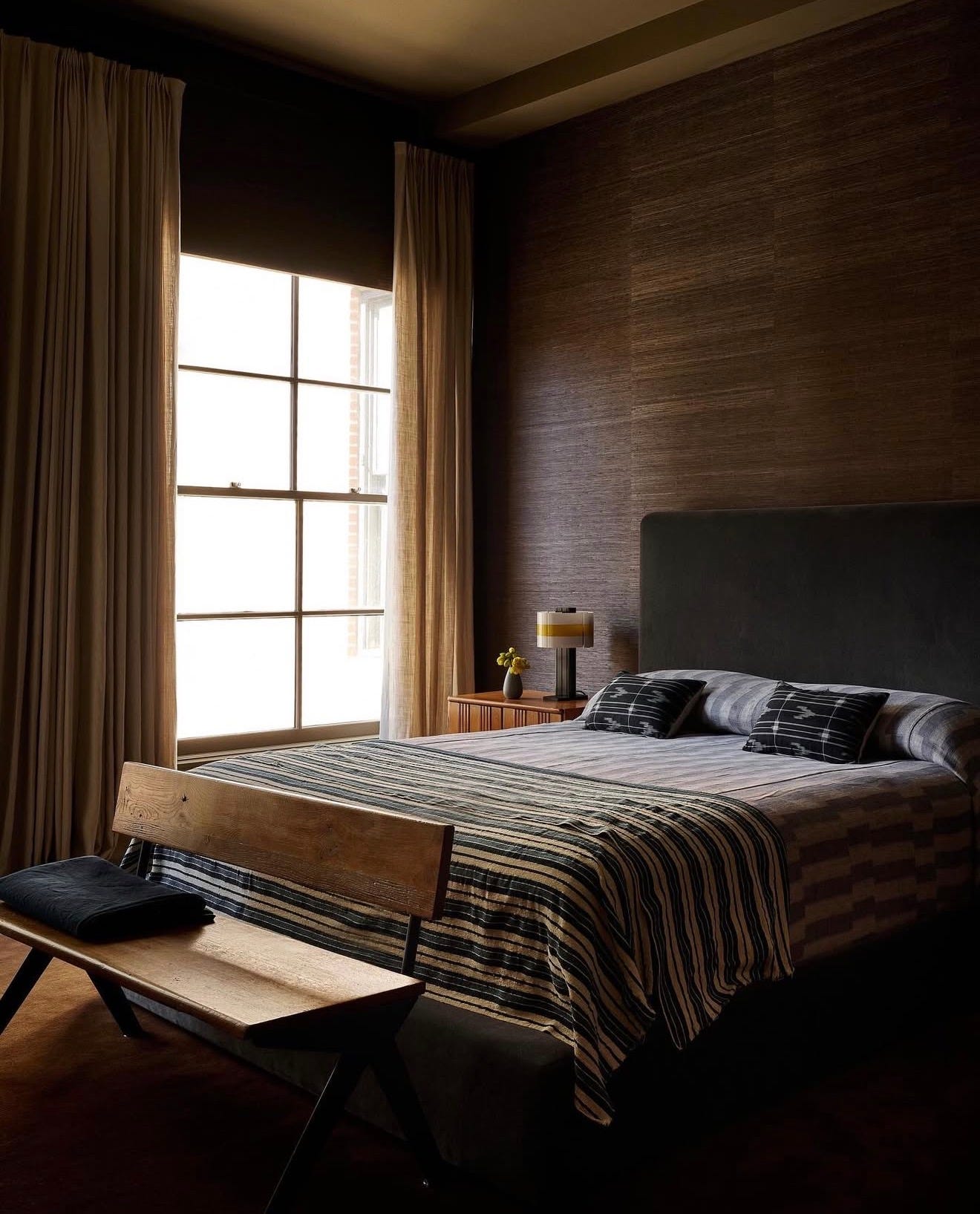
Wallpaper surprised me for an entirely different reason. I’d admired it in other people’s homes while maintaining that it wasn’t for me, which is one of the more polished ways we avoid admitting that we’re afraid of commitment. Then I moved into an apartment with flat walls. No trim, no crown molding, no paneling and very little architectural depth. The proportions were lovely, but the walls had the emotional range of printer paper.
I realized I wasn’t craving pattern so much as atmosphere. Wallpaper gave the room a grain, a softness and a sense of depth the architecture didn’t naturally possess. What I’d dismissed as decoration began to feel almost structural. It wasn’t something laid on top of the room. It was helping the room become itself.
Chinoiserie has followed a similar path. I used to find it overly theatrical, as though living with it might require excellent posture and a staff. But one old painted screen, a porcelain bowl or a fragment of pattern can bring an entire imagined world into a room. The problem was never chinoiserie. The problem was when everyone joined in at once.
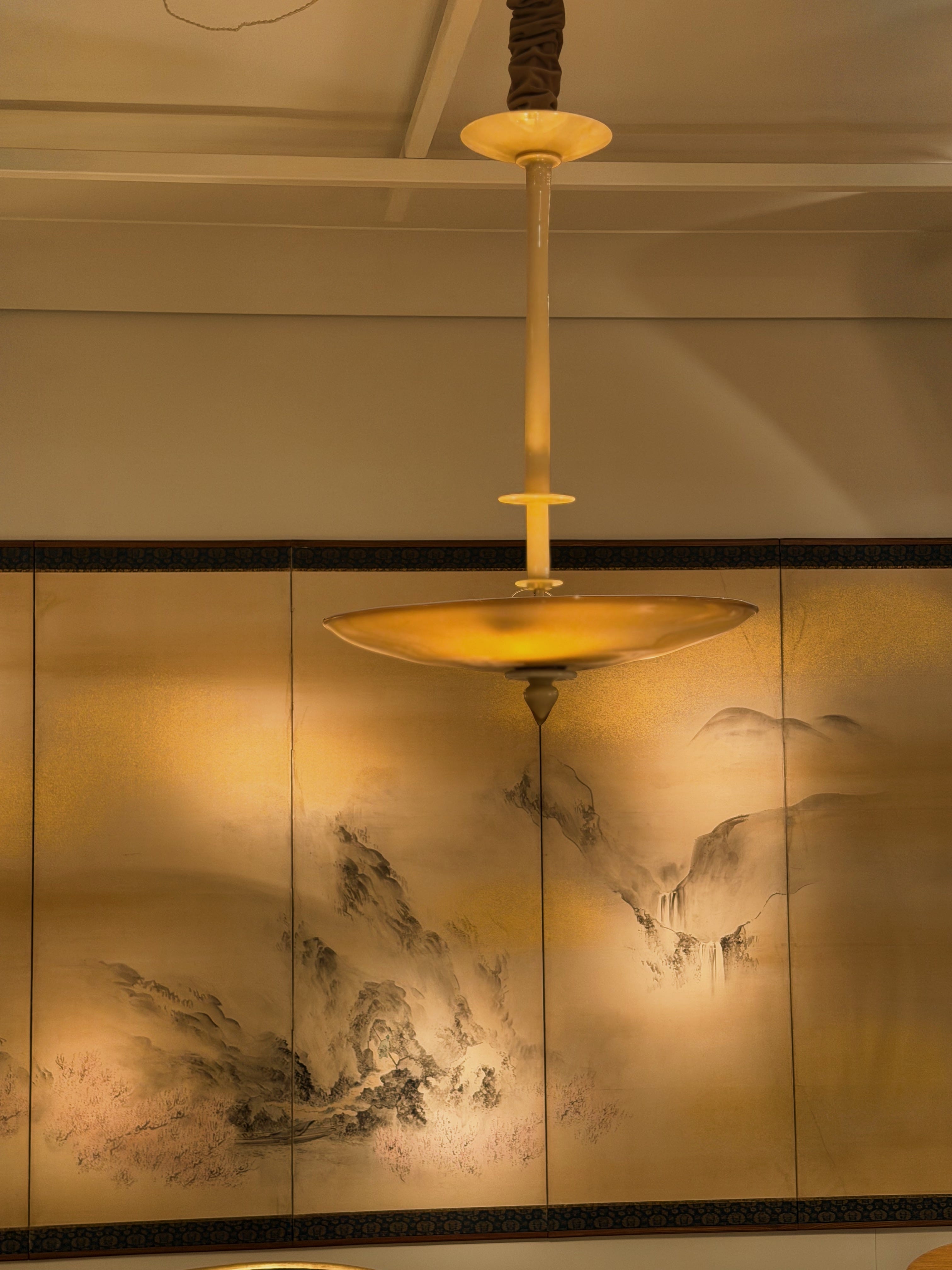
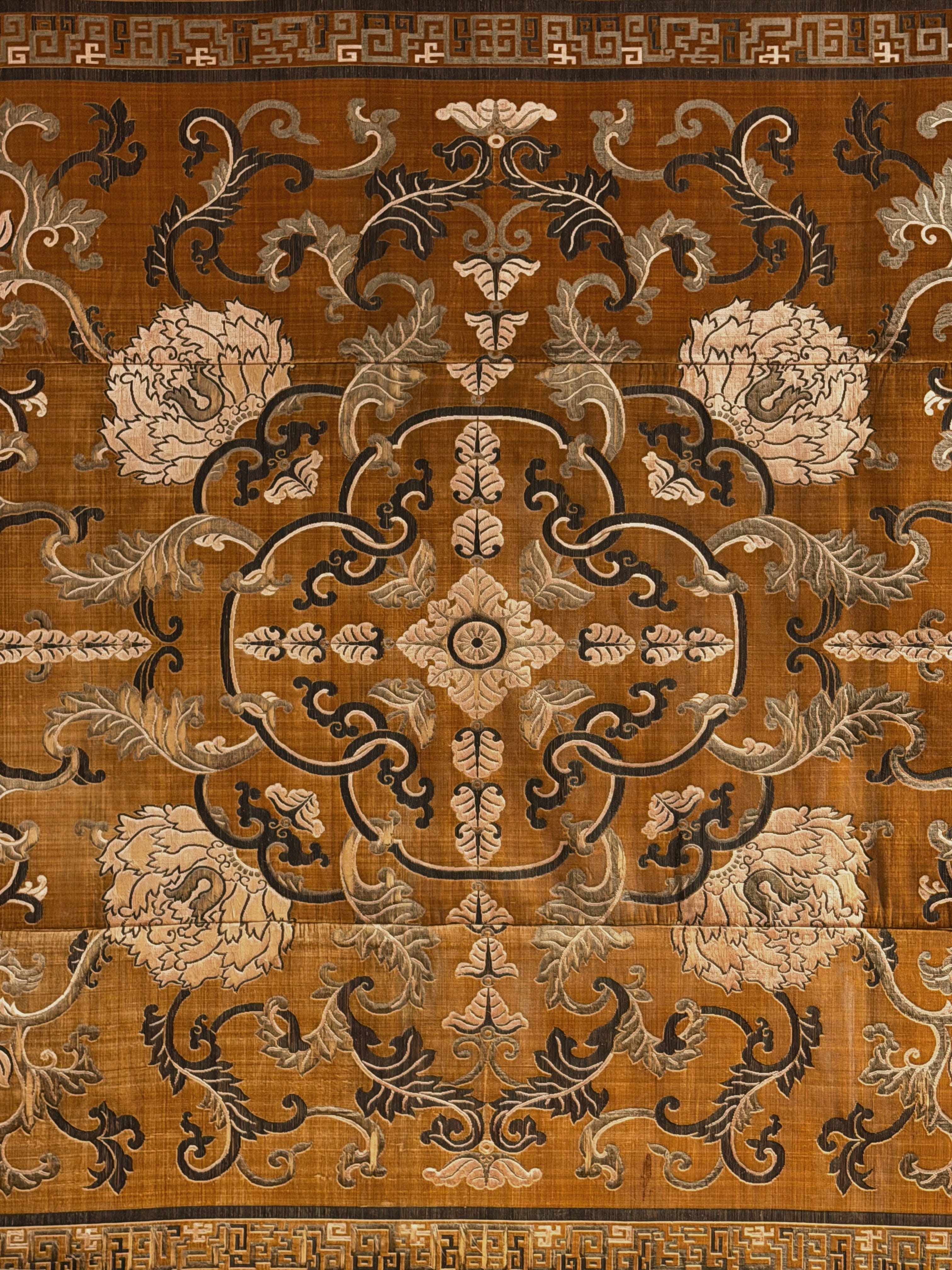
One piece can feel like history. Twenty can feel like a theme restaurant.
Then there’s making the bed. For years I styled beds with one oversized coverlet and loose, untucked corners. It had an appealing nonchalance, the visual equivalent of saying, “Oh, this old thing?” after spending forty minutes getting dressed. A tightly tucked bed felt stiff to me, too controlled and perhaps a little too pleased with itself.
Then I stayed at a hotel in Paris and became obsessed with the bed. I don’t remember what I ate for breakfast, which is unusual, or what flowers were in the lobby, which is nearly impossible, but I remember those corners. They were crisp without feeling severe. The whole bed looked cared for. Climbing into it felt less like disturbing a display and more like receiving something.
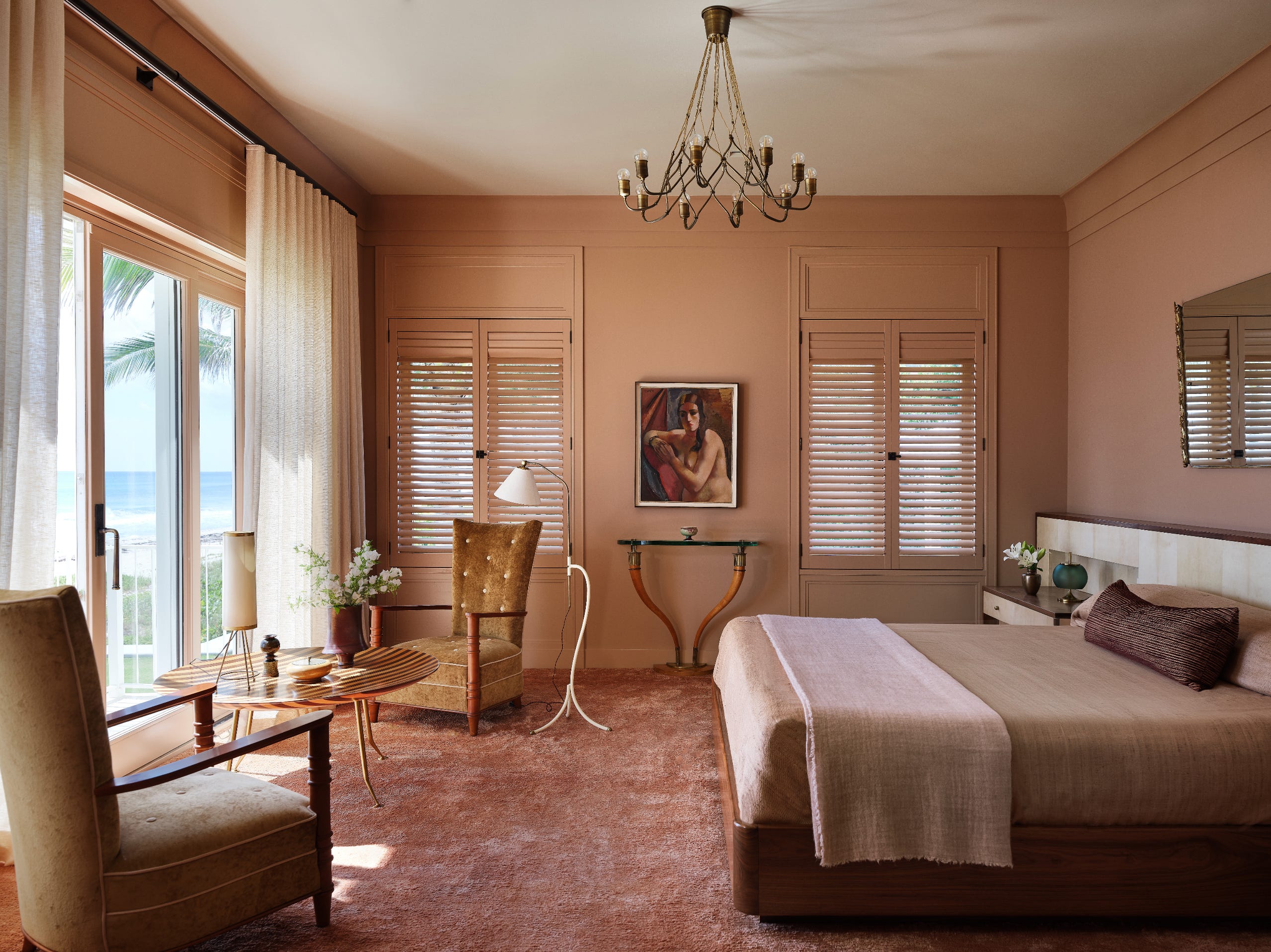
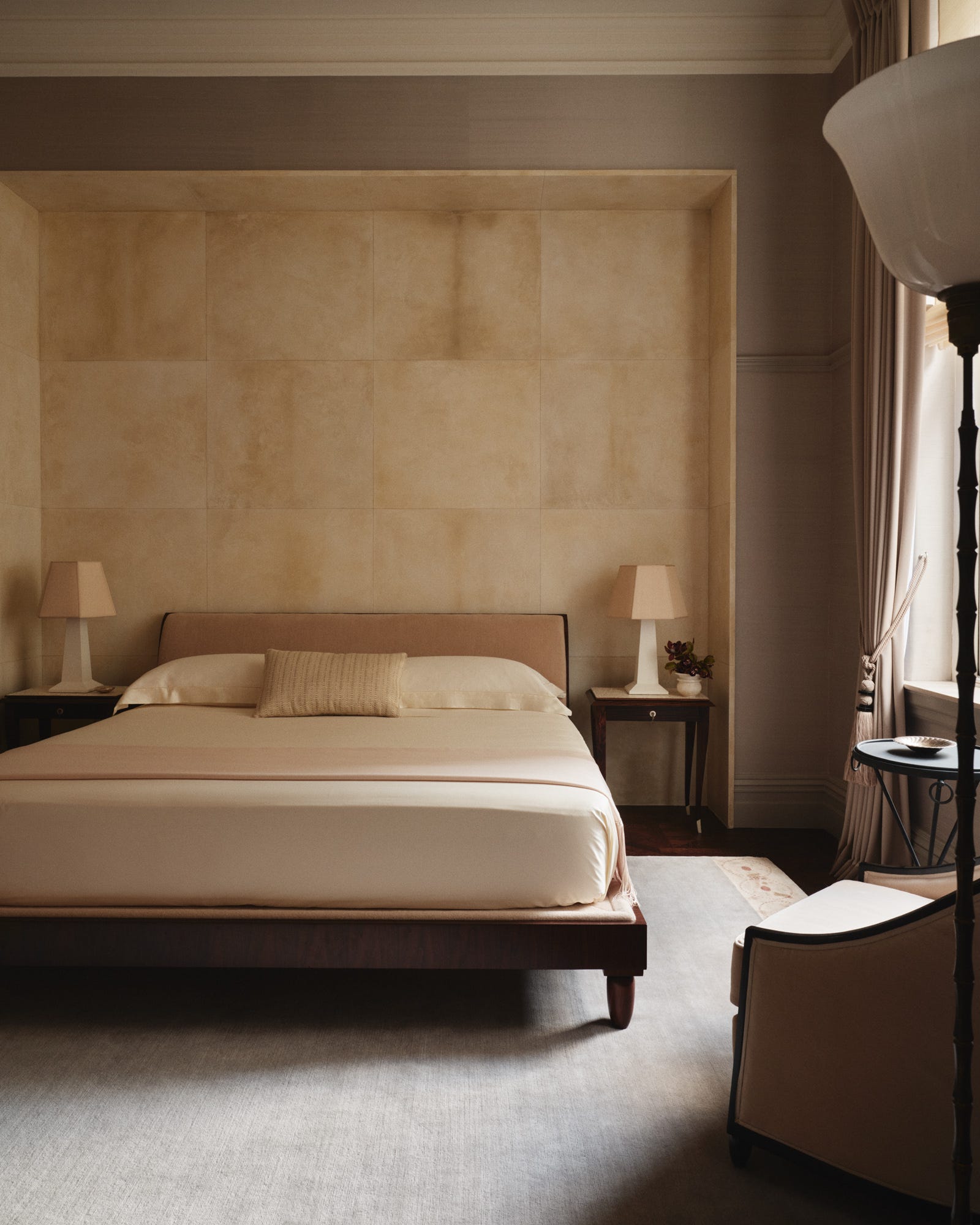
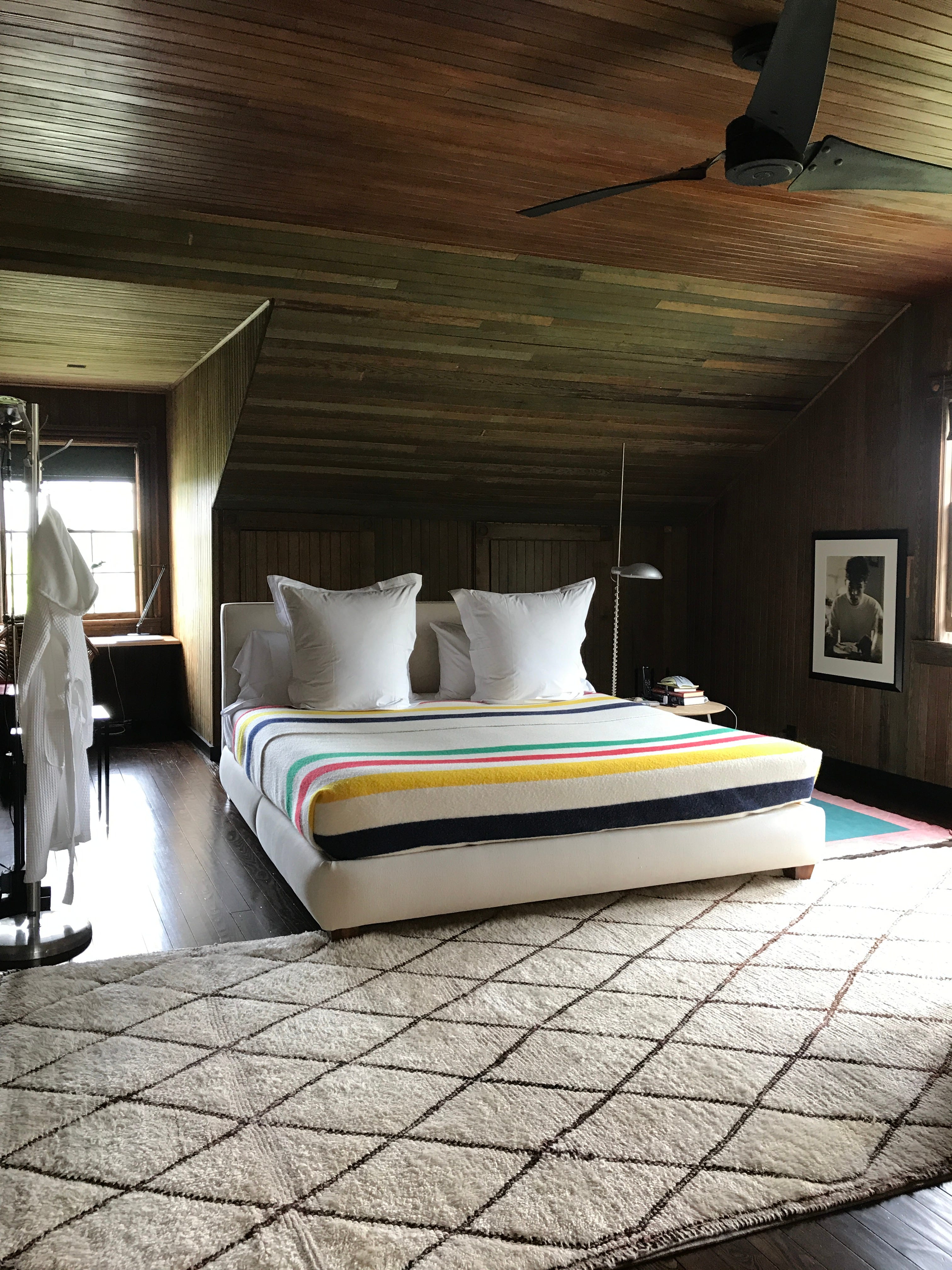
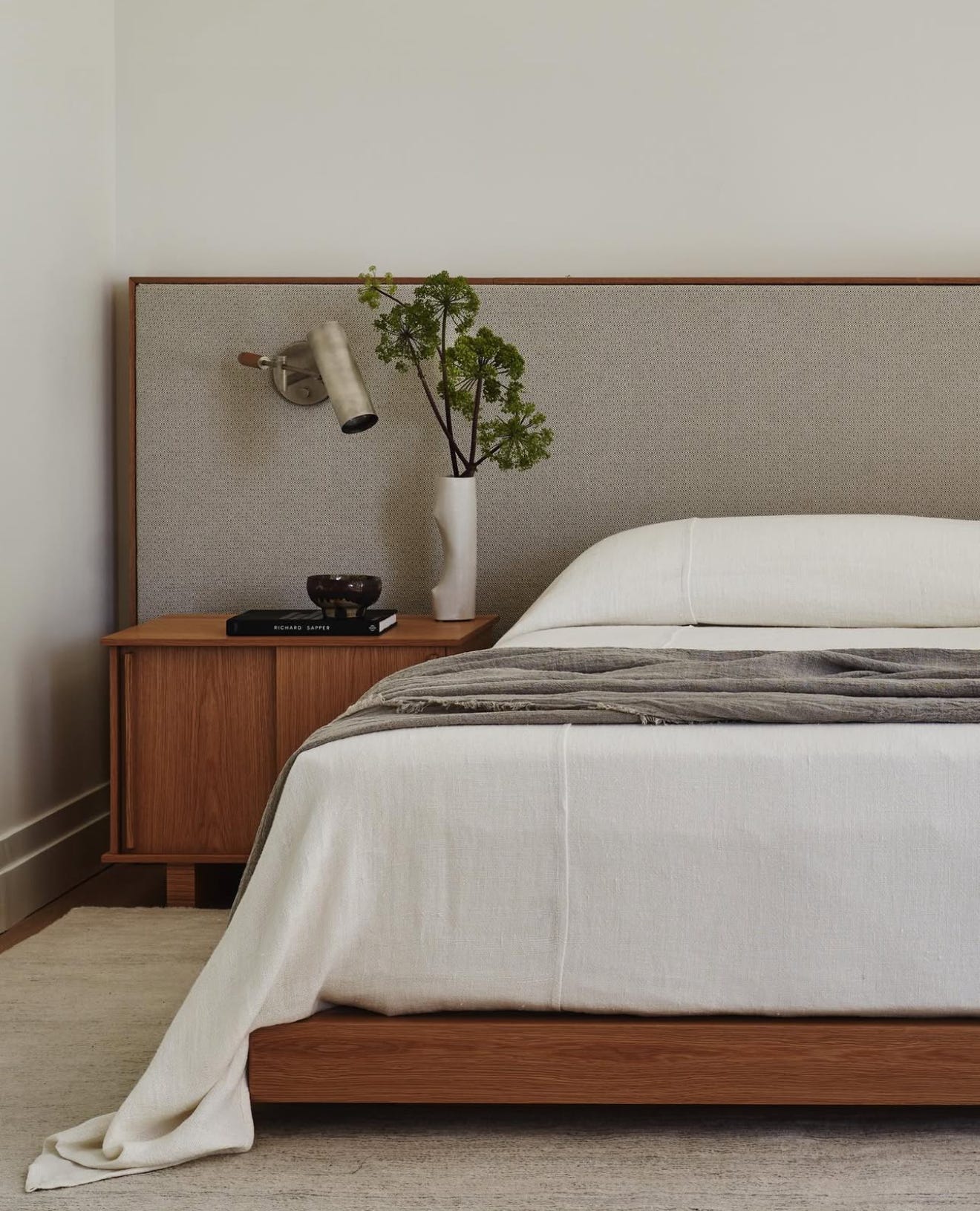
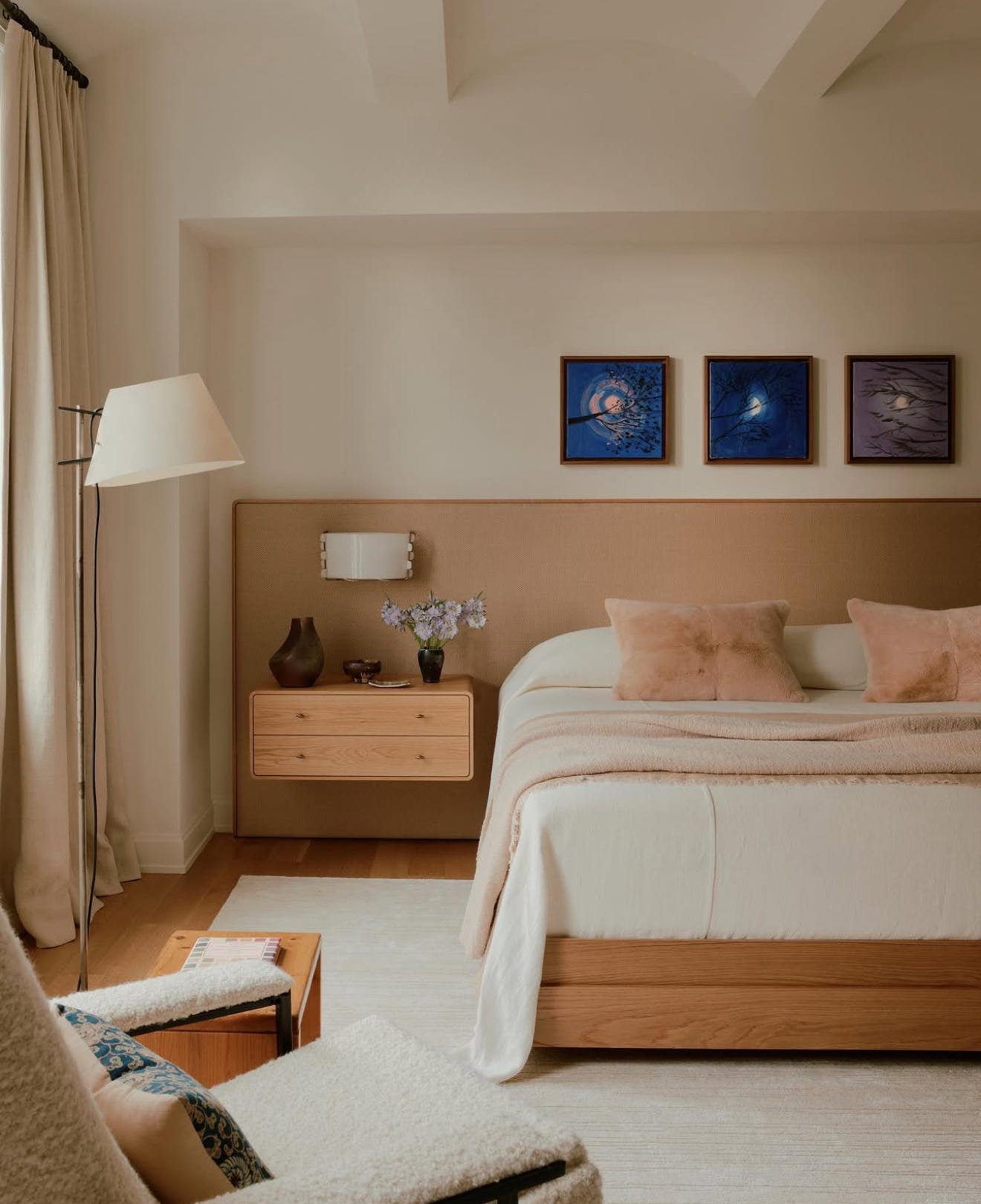
Now I tuck my own bed. I smooth the cover and pull the corners tight, and every morning I experience a tiny, ridiculous sense of accomplishment. It takes about thirty seconds, which means I resisted it for years on what were essentially ideological grounds.
I’d confused casualness with comfort. The hotel reminded me that care can be comforting too.
Glass-top tables may be one of the more surprising reversals. For years, I’d filed them away under office lobbies, bachelor apartments and rooms containing at least one questionable sectional. Then I began placing my new collection for Beni Rugs throughout my home and found myself reluctant to hide the motifs beneath solid furniture.
The glass-top side table in my living room reveals the motif of the rug underneath it. The table is there, but so is everything below it. I’d once thought of transparency as a lack of presence. Now I appreciate the way it can make room for something else. Not every piece needs to announce itself. Sometimes its job is simply not to interrupt.
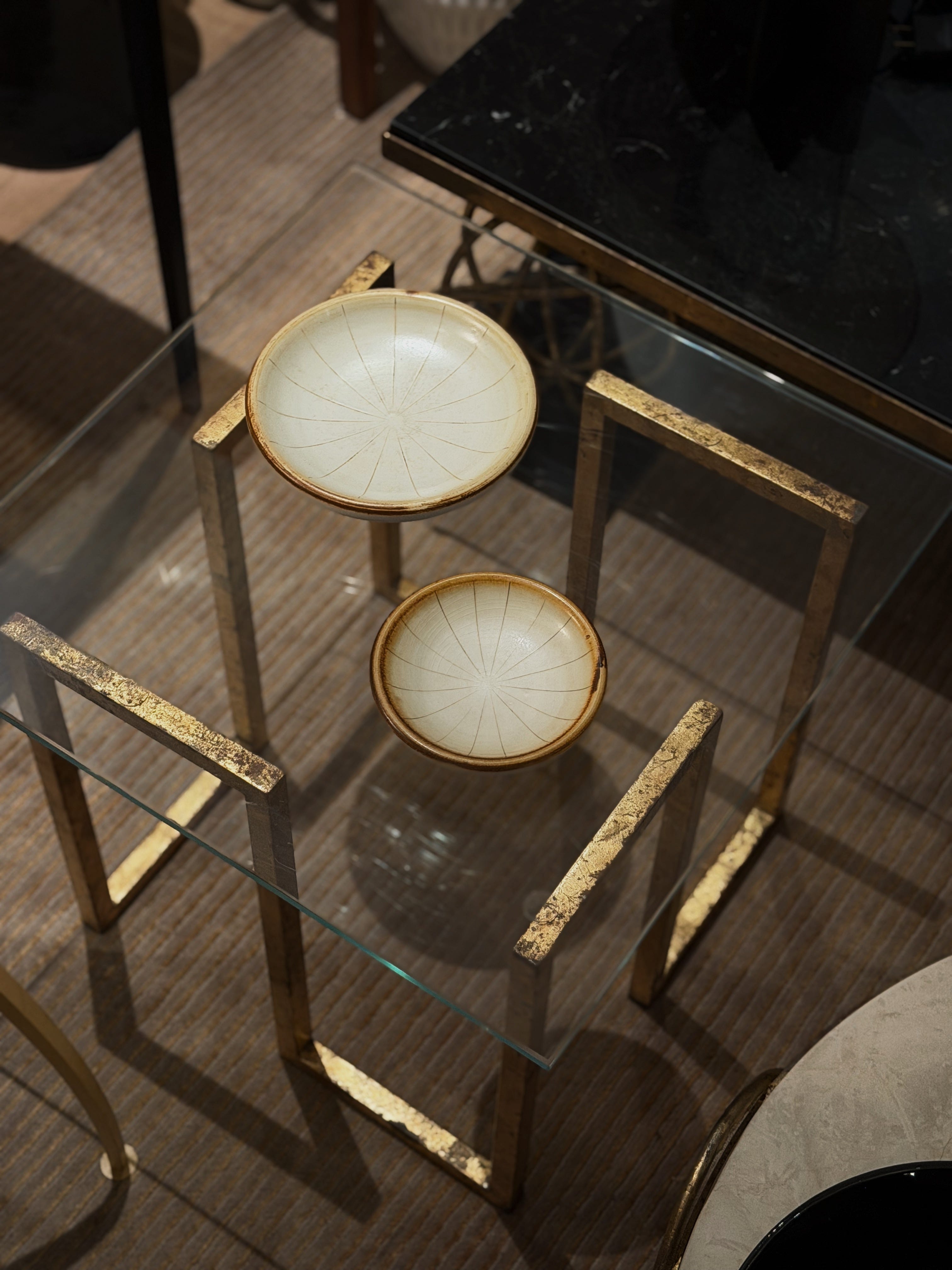
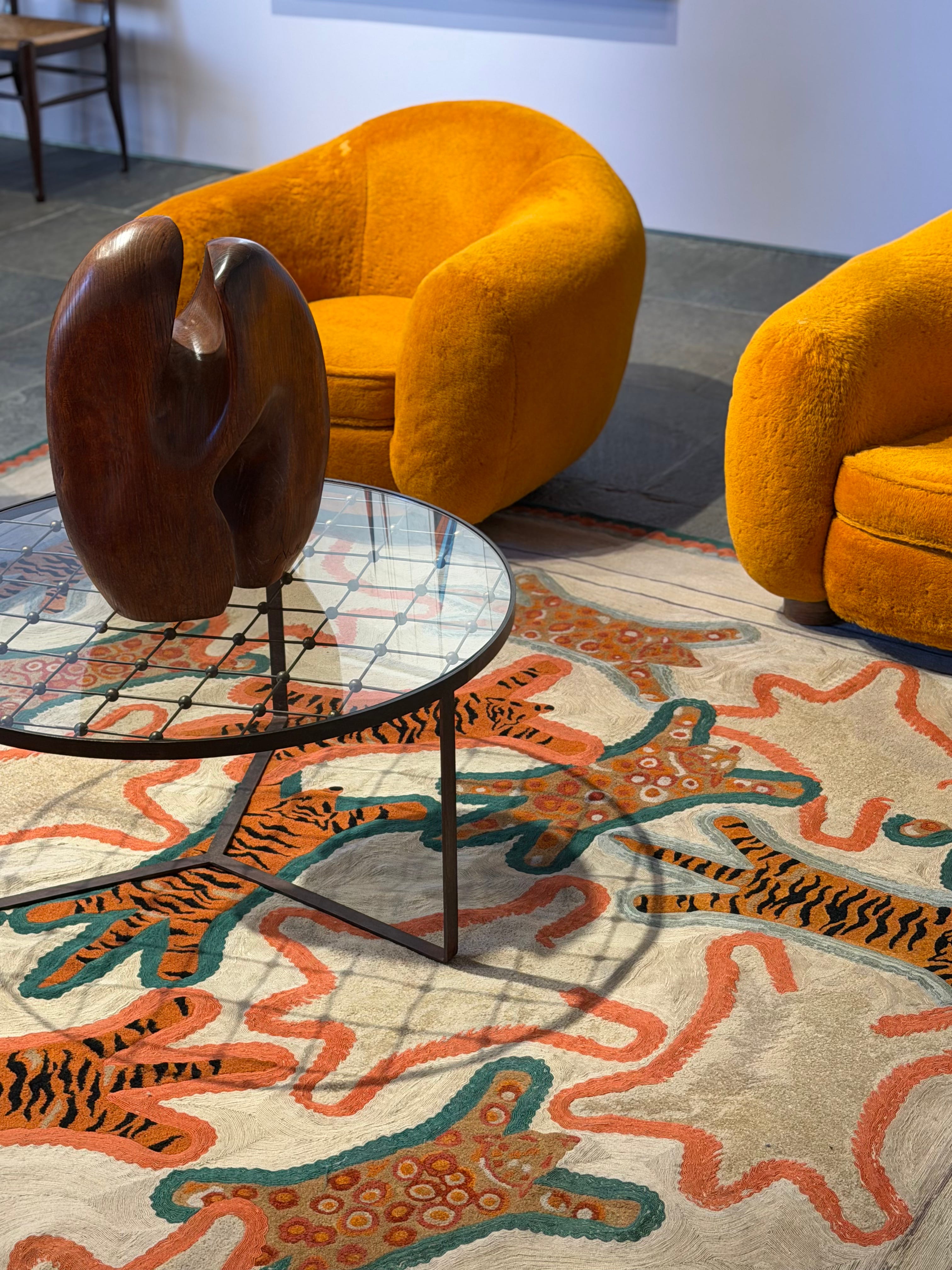
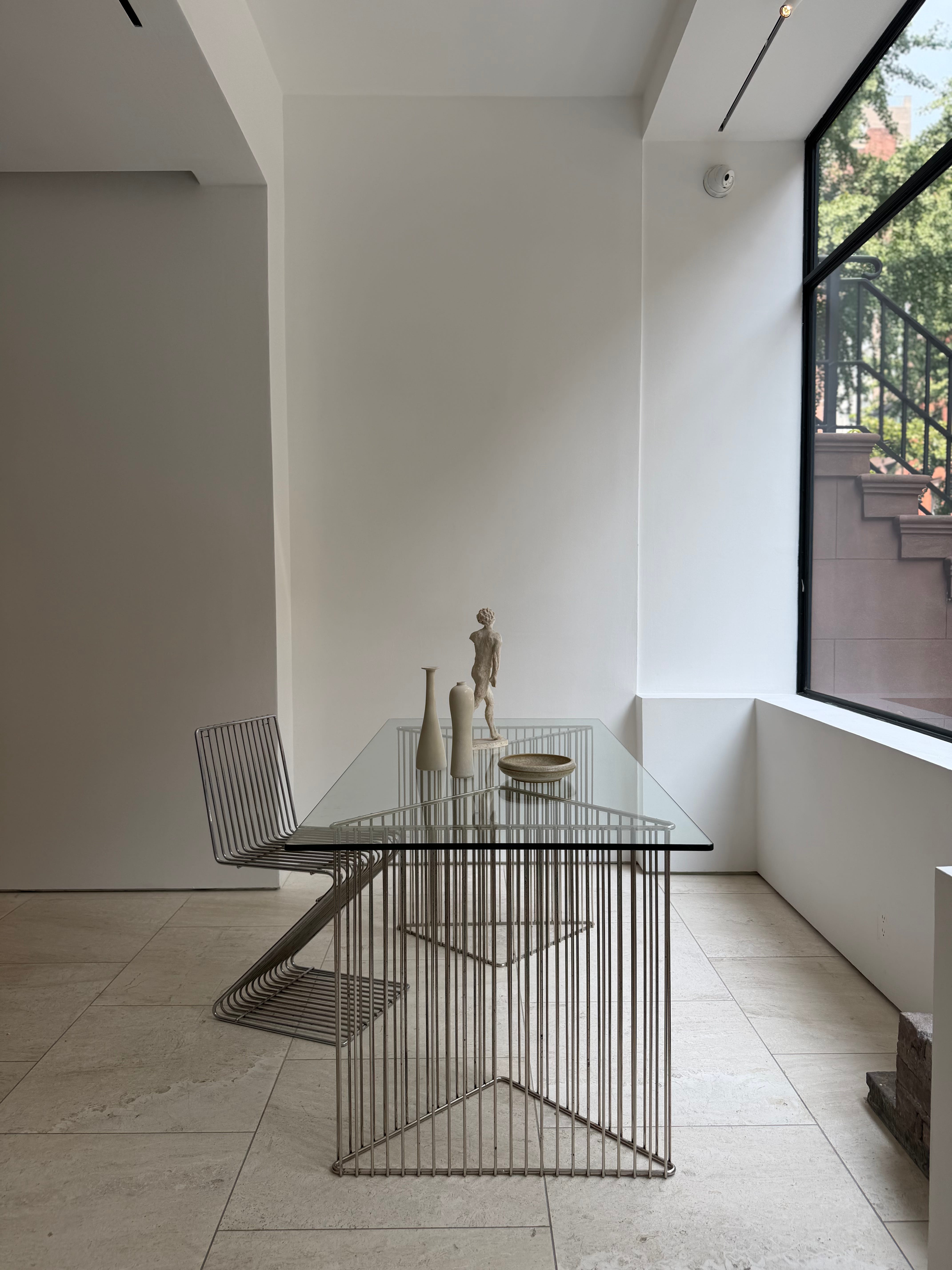
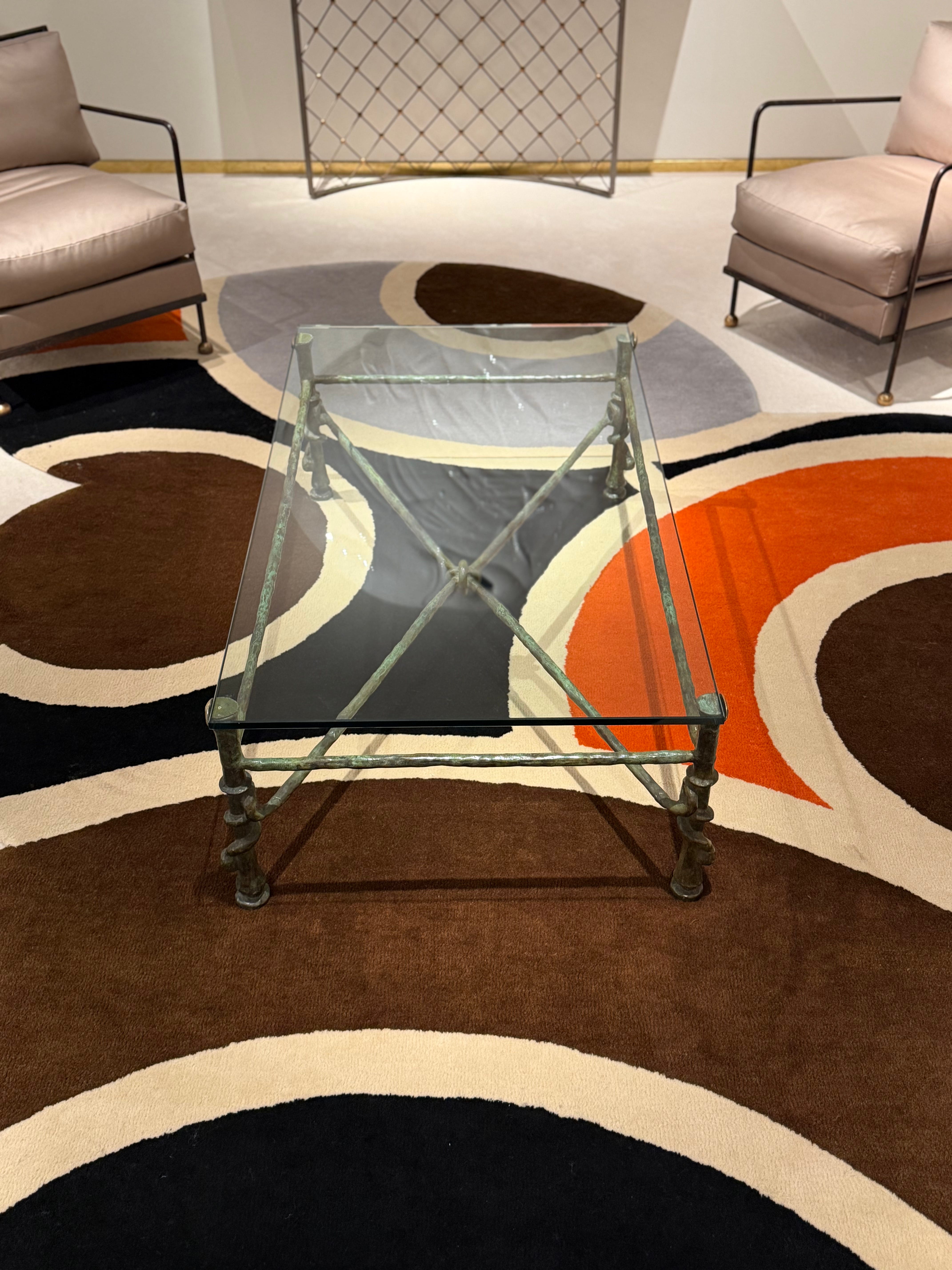
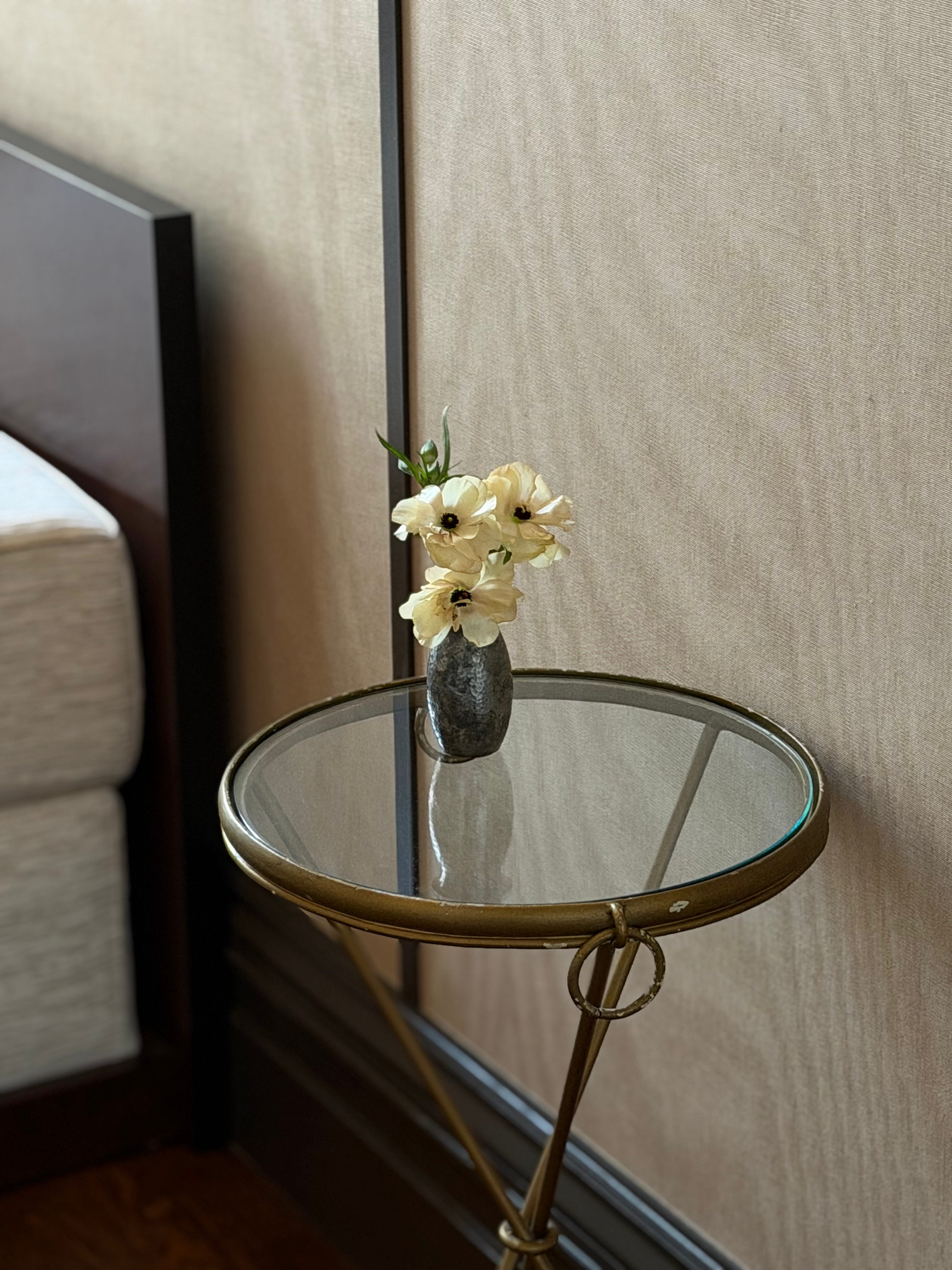
Separately, I’ve also come to love a pair of Joe D’Urso bedside tables with thick safety-glass tops and solid bases. They don’t disappear at all. They’re grounded and architectural, and the glass feels substantial rather than delicate. Apparently I didn’t have one fixed objection to glass-top tables. I had several smaller objections wearing a trench coat.
Symmetry has softened me in much the same way. For years, asymmetry seemed inherently more sophisticated. It was freer, more artistic, less obvious. But asymmetry isn’t automatically interesting, just as symmetry isn’t automatically dull. Good symmetry can make a room feel calm in your body before your brain understands why. Two lamps, two chairs, two objects holding a space steady. Then perhaps one branch leans too far in one direction, or one stool wanders slightly off course, and the whole thing comes alive.
I used to think the disruption was the interesting part. Now I understand that it only works because something beneath it is holding still.
I’m also less doctrinaire about mixing metals. There was a time when I believed discipline meant choosing one finish and sticking with it. Brass meant brass. Chrome meant chrome. Everyone knew where they stood.
Now that seems a little like insisting every guest at dinner wear the same outfit.
Old brass, aluminum, polished steel, bronze and silver each respond differently to light. They age differently too. A room can become richer when not every surface is speaking with the same accent. It feels less coordinated, perhaps, but more collected, which is increasingly the side I find myself on.
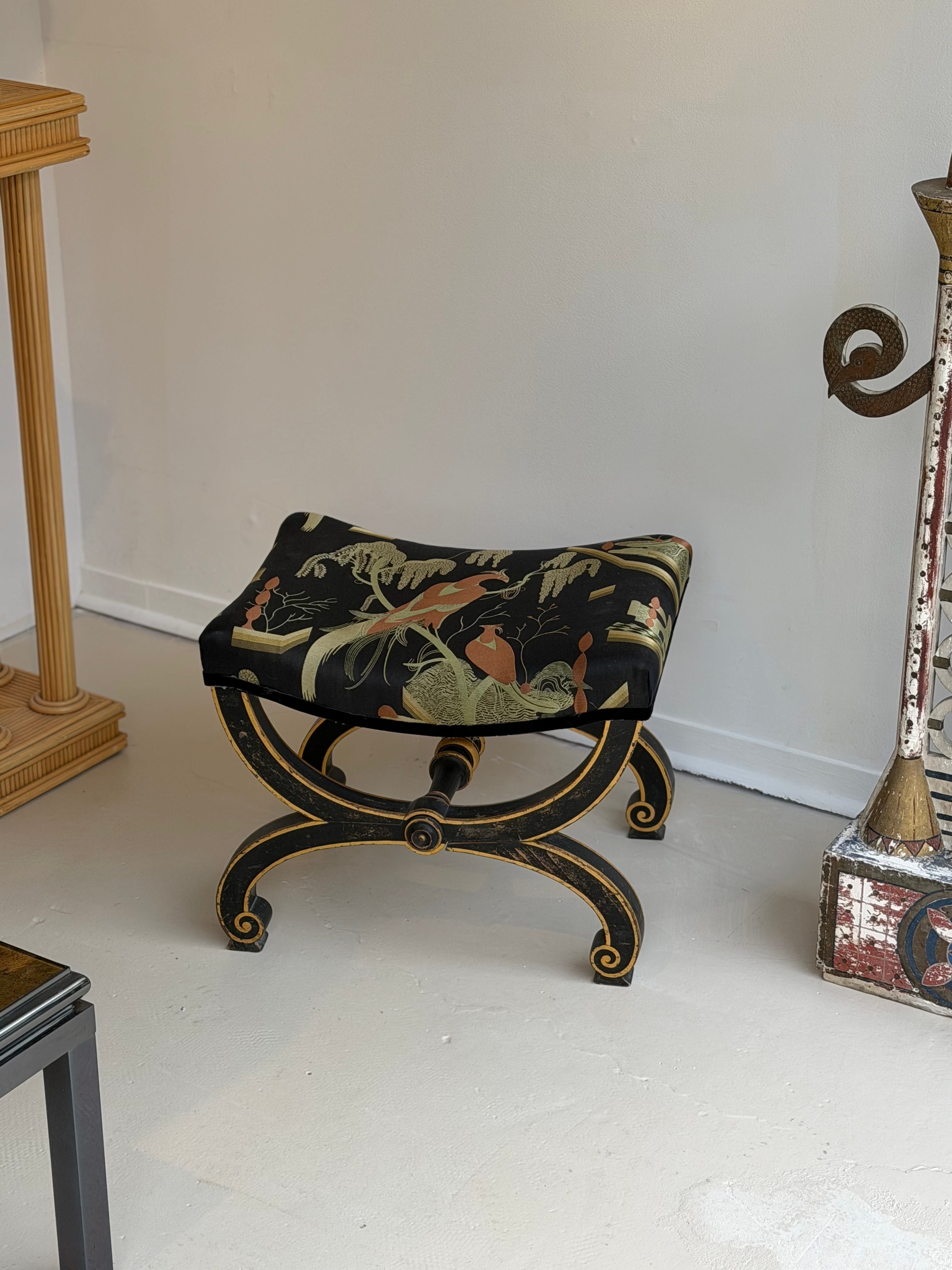
The stool I brought home from Paris taught me something slightly different.
I’d first seen it in March as part of a pair and couldn’t stop thinking about it. It was one of those objects that didn’t seem urgent in the moment but followed me home anyway, without the inconvenience of actually being purchased. It stayed somewhere in the back of my mind while I went on with my life, pretending I was perfectly capable of moving forward without it.
When I returned in July, one of the pair had sold. The other was still there.
This felt both miraculous and mildly accusatory.
So I bought it, found a cardboard box, carried it to the airport and watched a man wrap it in layer after layer of plastic until it looked capable of surviving not only the baggage hold but a minor apocalypse. I checked it with my luggage and spent the flight imagining every possible way the decision could end badly.
It arrived intact.
Sometimes taste isn’t about what catches your eye. It’s about what refuses to leave it. And sometimes changing your mind doesn’t happen in a dramatic flash. Sometimes it happens over four months, while an object quietly remains itself and you become the person willing to carry it through an airport.
That may be what I’ve been thinking about most during this unintended pause. Some of you were waiting for me to catch up with these posts. Meanwhile, I was catching up to a stool in Paris, an orchid in Gramercy, wallpaper, tucked corners, layered textiles and glass-top tables. None of these things became better while I was away. They didn’t reinvent themselves or make a compelling case. I simply met them again as a slightly different person.
Thank you for waiting for me.
I suspect we all have a few opinions we’ve been carrying around long after they’ve stopped being useful. Mine just happen to concern orchids and bed corners. Yours may be more important. Or less important. Possibly olives.
I’ve started to find it comforting that we don’t have to decide everything once and then spend the rest of our lives proving ourselves consistent. We can look again. We can be surprised by the thing we were certain we understood. We can discover that a room, an object or a person has something else to show us, although sometimes, irritatingly, the person is us.
The older I get, the less interested I am in having a signature style and the more interested I am in having a living one. Something that can absorb a contradiction, survive a bad idea and make room for new information. A home that doesn’t require me to remain exactly who I was when I began furnishing it.
I thought having good taste meant becoming more certain. I’m beginning to think it might mean becoming easier to surprise.
Good taste isn’t about collecting convictions. It’s about staying interested enough to keep revising them.
Maybe that’s what I’ve been catching up to.
It’s about becoming someone who’s still willing to be surprised. The things I dismissed ten years ago weren’t waiting to become better. They were waiting for me to catch up.
Love,
Colin

You’re an incredibly gifted writer. This piece has brilliantly articulated my own creative evolution and philosophy — I’m in graphic design — that I’ve sent it to my team as a reminder that a creative person is meant to evolve, no matter the discipline they practice.
“So there I was, sitting at the gate, waiting for someone to arrive with a box of dead butterflies, as one does when one has made several interesting life choices.”
That could be the opening line of a great thriller!😎🙏🏻